Never Stop Improving
Summary
There can be a tendency to maintain operations as-is because it works fine. However, keeping to the status quo doesn’t provide opportunities for growth, as Eugene Water and Electric Board experienced with their motor pool technology.
Eugene Water and Electric Board (EWEB) is a prime example of an organization who never stops improving. As a result, they have won multiple awards that recognize the efforts made to improve their fleet of over 220 vehicles – in 2015 EWEB was recognized as one of the greenest fleets in North America through 100 Best Fleets Green Fleet Award and NAFA’s Sustainable Fleet Accreditation Program. EWEB was also part of the Leading Fleets for 2017 through Government Fleet.
Needless to say, EWEB is a leader in fleet management, and Gary Lentsch is the driving force behind many of the fleet initiatives. As the Fleet Manager, Lentsch knows it is important to always look for ways to improve.
In 2014, Lentsch identified the opportunity to automate and right-size EWEB’s motor pool. Employees were already accustomed to sharing vehicles, though the process was manual and cars were dispatched a quarter mile away from most of the users. With INVERS technology, Lentsch was able to bring a simple and effective reservation system to motor pool users while also reducing the number of vehicles in the motor pool from 20 to 11 vehicles.
The automated motor pool allowed EWEB to increase the utilization of each vehicle while maintaining optimal availability for users. With these great results, Lentsch was already looking for additional ways to further improve the motor pool. He understood that continued success meant creating a great user experience, starting from the reservation to driving the actual vehicle. As a result, walk-up reservations was introduced.
Initially, users had to make a reservation in advance to access a vehicle from the INVERS KeyManager. This worked well for people who needed to plan a trip in advance, but it was difficult for some users who were more spontaneous and needed a vehicle last-minute. Enabling walk-up reservations removed more barriers in accessing the motor pool as users could now walk-up to the KeyManager, scan their employee badge, and access any vehicle that was available in the requested time frame.

Following the best practices of change management, Lentsch first introduced walk-up reservations to a small group of users to trial this feature and work out any issues before fully rolling out access to everyone. In less than a month, the walk-up feature was officially implemented among all users, further enhancing the success of EWEB’s automated motor pool operations.
For Lentsch, implementing an automated motor pool is only the start of improving EWEB’s fleet operations. With the dynamic needs of his fleet, he works with a handful of companies to create an ecosystem of solutions. Lentsch says, “INVERS fits in well with our fleet because we were able to easily transition over 500 users to the new reservation process, and users could continue using their employee badge to access vehicles.” Being able to introduce improvements to motor pool seamlessly to his drivers was the key to his success.
Related Posts
Car Sharing, Expert Interviews
KINTO Share’s Perspective on Car Sharing in the Nordics
We interviewed Olof Holmgren, GM KINTO Share/Flex Sweden & Denmark, about his experiences with station-based car sharing in Sweden and Denmark. He provided valuable insights into topics such as advantages of providing different mobility services under one brand, the Swedish and Danish mobility markets, KINTO services, and innovations of the future.
Car Sharing, Expert Interviews
Mobility’s Perspective on Cooperatives, Microcars and Transit
We interviewed Corinne Vogel, CEO of the Mobility Cooperative, on her experiences in station-based car sharing. She shares valuable insights on, for example, synergies between car sharing and public transport and services for business customers.
Car Sharing, Technology
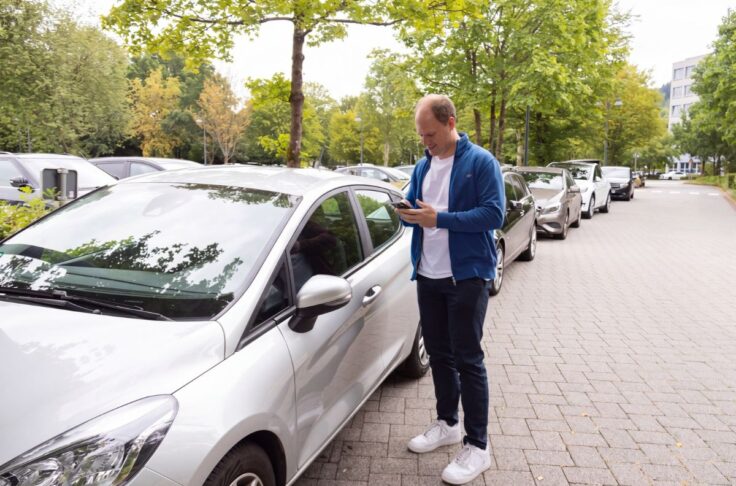
Car Sharing Connectivity: What Happens to Your Fleet When a Mobile Network Fails
Nobody questions connectivity in car sharing until something is wrong. We take a look behind the scenes of two real network outages in Denmark and Latvia to show what happens to your fleet when a mobile network fails.