KINTO Share’s Perspective on Car Sharing in the Nordics

Summary
We spoke to Olof Holmgren, GM KINTO Share/Flex Sweden & Denmark, about his experiences with station-based car sharing in Sweden and Denmark. He provided valuable insights into topics such as advantages of providing different mobility services under one brand, the Swedish and Danish mobility markets, KINTO services, and innovations of the future. KINTO Mobility, a service by Toyota, operates in various countries across Europe. Sweden and Denmark are examples for their combined KINTO Share and Flex fleets. In Sweden and Denmark alone, they operate 2,200 cars.
The European car sharing market is complex, featuring a diverse range of business models implemented on the streets. Operators employ various strategies, such as station-based services, peer-to-peer car sharing, and free-floating services, to address distinct use cases and offer distinct services. In addition, the European car sharing market is one of the largest and the most complex in the world. To address and explain some of these complexities, INVERS publishes their INVERS Mobility Barometer on “European Car Sharing 2026”. This 75-page report helps car sharing operators quickly understand key market dynamics, insights, and trends.
Table of Contents
Could you please introduce our readers to your KINTO mobility portfolio in Sweden and Denmark?
KINTO offers a broad mobility portfolio across Sweden and Denmark, covering both short-term and long-term mobility needs. Through KINTO Share, our station-based car sharing service, customers can access vehicles on demand by the hour or day via our app, while KINTO Flex provides flexible subscriptions as an alternative to traditional leasing, with full flexibility and no long-term commitment.
Today, KINTO Share operates more than 2,200 vehicles across Sweden and Denmark, making us one of the largest car sharing operators in the Nordic region. Our vehicles are available in major cities, residential areas, transport hubs, and business districts, providing customers with convenient access to mobility whenever they need it. Our ambition is simple: to make car ownership optional by offering a flexible, reliable, and sustainable alternative.
What are the main advantages of providing different mobility services under one brand in your markets?
Customers have different mobility needs at different stages of life, and these needs can change over time. By offering both car sharing and flexible subscriptions under the KINTO brand, we can provide a seamless mobility journey rather than a single product. The same applies to seasonal needs. During the summer, some customers need a car for one or two months, while during the winter they may only need a vehicle for a couple of hours at a time.
There are clear synergies between KINTO Share and KINTO Flex. Some customers use car sharing occasionally and later move to a subscription model, while others combine the services depending on their lifestyle or business needs. Operating multiple services under one brand also allows us to leverage technology, customer insights, and operational expertise, creating better customer experiences and stronger economies of scale. We also utilise the same fleet for both services. When demand for subscriptions increases, we can allocate more vehicles to KINTO Flex, and vice versa.
How would you describe the current state of the car sharing sector in Sweden and Denmark, and what recent developments have there been?
The car sharing market in both Sweden and Denmark continues to mature, driven by urbanisation, changing consumer behaviour, and an increasing focus on sustainable mobility. More people are recognising that access is often more valuable than ownership, particularly in urban areas where parking costs, congestion, and the overall cost of car ownership continue to increase.
At the same time, we see growing interest from municipalities, property developers, and corporate customers, who view shared mobility as an important part of creating more sustainable and liveable cities. In Sweden and Denmark, car sharing is increasingly being integrated into new residential developments and mobility hubs, helping to reduce the need for private car ownership and free up valuable urban space.
Recent developments include increased electrification, improved digital customer experiences, and stronger integration with public transport and other mobility services. We believe these trends will continue to accelerate as cities invest in smarter mobility solutions and consumers increasingly embrace flexible alternatives to traditional car ownership.
Which car sharing innovation will have become standard in 10 years’ time?
In ten years, I believe the biggest innovation will not be a single technology, but the seamless integration of mobility into people’s everyday lives. Car sharing will be a natural part of a connected mobility ecosystem, where customers can effortlessly combine public transport, shared cars, micromobility, and other mobility services through a single digital platform.
AI will play a key role in optimising vehicle availability, fleet placement, and pricing in real time, ensuring that the right vehicle is available at the right place and at the right time. At the same time, electrification will continue to accelerate, making shared mobility even more sustainable. Ultimately, the customer experience will become almost frictionless, with mobility available on demand whenever and wherever it is needed.
Further insights into the European car sharing market
Thank you, Olof, for sharing your expert insights.
For more information and interesting findings about European car sharing, we encourage readers to check out our 75-page INVERS Mobility Barometer on “European Car Sharing 2026” with more expert interviews as well as insights from national car sharing associations. To discover more from KINTO Share, please visit their website.
Note: This interview has been originally conducted in English. On our blog, it is also available in German.
Related Posts
Car Sharing, Expert Interviews
Mobility’s Perspective on Cooperatives, Microcars and Transit
We interviewed Corinne Vogel, CEO of the Mobility Cooperative, on her experiences in station-based car sharing. She shares valuable insights on, for example, synergies between car sharing and public transport and services for business customers.
Car Sharing, Technology
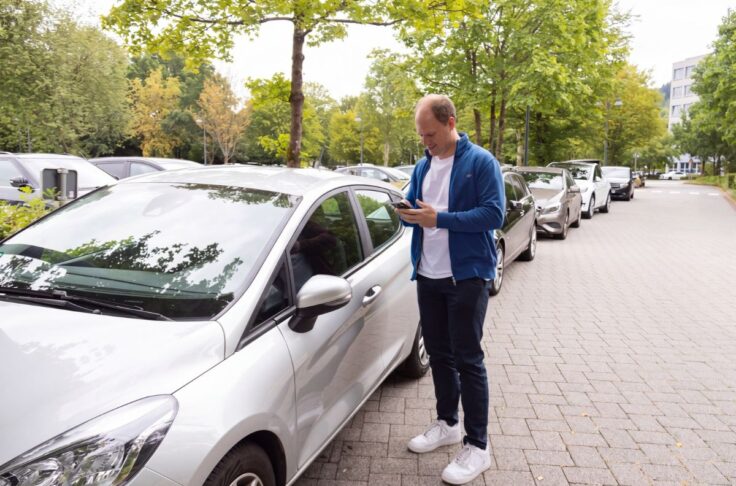
Car Sharing Connectivity: What Happens to Your Fleet When a Mobile Network Fails
Nobody questions connectivity in car sharing until something is wrong. We take a look behind the scenes of two real network outages in Denmark and Latvia to show what happens to your fleet when a mobile network fails.
Car Sharing, Expert Interviews
MyWheels’ Perspective on Car Sharing Innovations like V2G & Driving Score
Claire Sipkema, COO of MyWheels, on her car sharing expertise in the Netherlands. She shared valuable insights on the vehicle-to-grid technology, anchoring car sharing into new housing projects, experiences with their driving score, their vehicle ambassador programme with so-called “sleutelfiguren”, and key factors for the success of Dutch car sharing.