

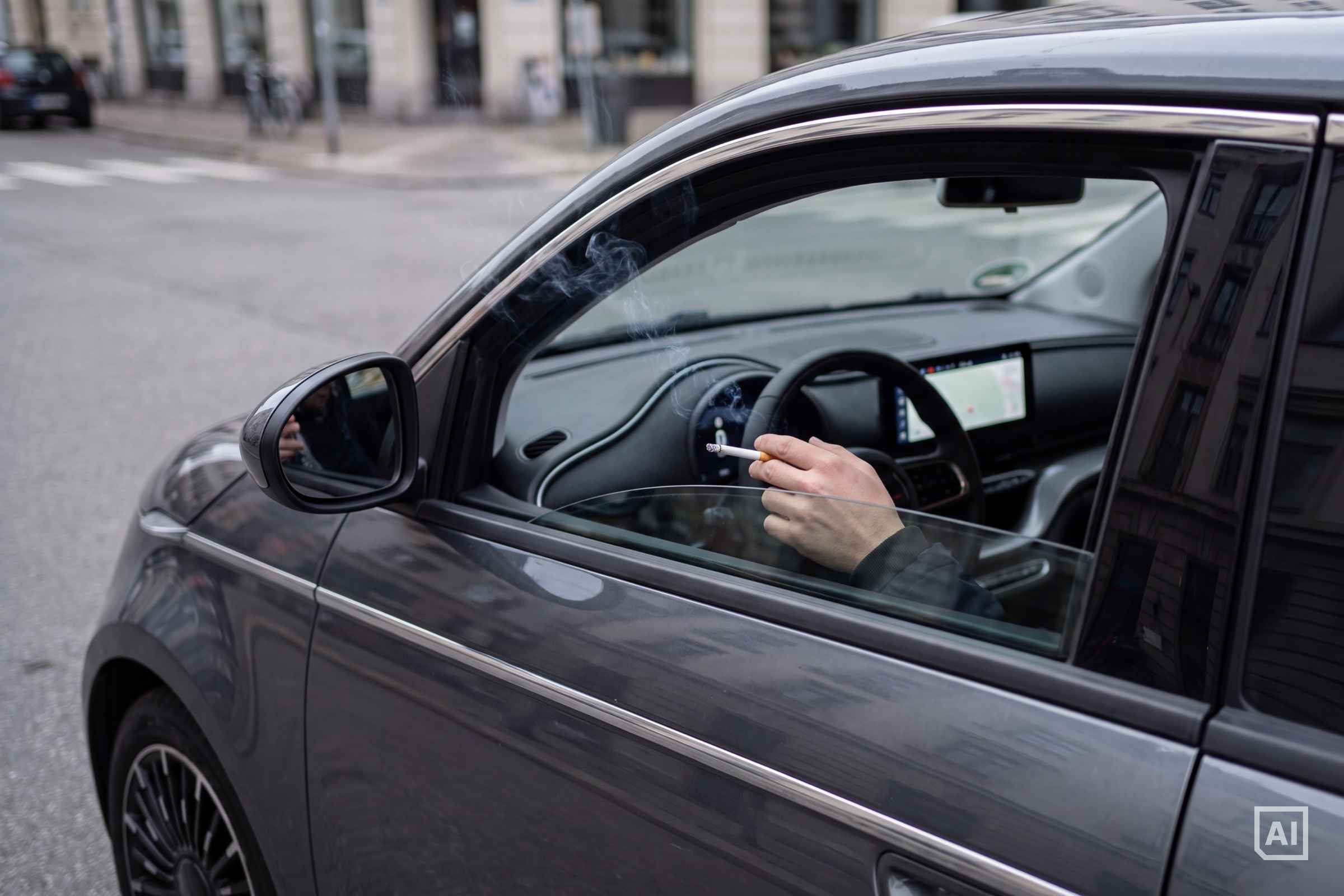
Smoking in shared vehicles is a persistent problem for every operator, driven by a simple mindset: not my vehicle, not my problem. Customers who smoke in their own car often do the same in a shared one. The consequences, however, fall on you and on the customers who rent the vehicle afterwards.
In this lesson, we'll cover why smoking is a serious problem, how to notice it reliably across your fleet, and how to prevent it with clear rules and a graduated response. You'll also learn how to build smoke management into your daily operations.
Why Smoking is a Problem
Every car sharing operator bans smoking in its terms and conditions. Those who violate the rules affect your service in four ways:
- Lost customers:
A vehicle that smells of smoke drives subsequent (non-smoking) users away. Third-hand smoke residue is a genuine health concern, and families with young children may abandon your service entirely - The broken window effect:
A dirty, smoke-smelling car signals to the next user that littering and careless treatment are acceptable, inviting more of both - Direct damage:
Dropped cigarettes burn holes into seats, and cleaning costs accumulate with every incident - Reduced residual value:
Vehicles returned to leasing partners or under manufacturer buyback agreements smelling of smoke trigger penalties or a lower buyback price
Notice Smoking
Customer reports alone won't identify the culprit. Complaints usually come from subsequent customers, and they tell you that a vehicle smells, not who caused it. By the time a report arrives, several rentals may have passed since the incident.
Directly asking the suspected customer is rarely effective either. Denial is simple, and the claim that the car already smelled at pickup is impossible to disprove without evidence. As with vehicle damage, attribution decides whether costs land on the responsible user or on your books. Without automated detection, enforcing a no-smoking policy is practically impossible.
Manual methods such as customer feedback, employee inspections, and nicotine surface tests each have their place among the solutions to detect smoking in cars. All of them, however, identify a smoke-affected vehicle after the fact, and rarely the trip that caused it.
In-vehicle smoke detection closes that gap. A sensor monitors air quality continuously and identifies cigarette or vape use in real time, even with a window open. Because the sensor is connected through your telematics unit, every event is attributed to the active rental, and enforcement becomes evidence-based.
Belgian free-floating operator Poppy detected 886 smoking events from 377 trips within the first 50 days of using automated smoke detection.
Source: INVERS Success Story with Poppy
Prevent Smoking
Reliable detection is also your strongest prevention tool. Once customers know that every vehicle monitors for smoke, most won't take the risk. Pair that deterrent with a graduated, verify-first response, as with vehicle misuse. A team member confirms the event data before any consequence follows.
1. Set Clear Rules
Spell out in your terms and conditions that smoking is prohibited, that detection is active, and which consequences follow. Known rules are broken less often, and a documented policy makes every fine defensible. Many operators display a reminder of their no-smoking policy before every rental that customers have to acknowledge in order to start their trip.
2. Remind First
A first verified offense triggers an automated message reminding the customer that smoking is prohibited. For most users, knowing they were detected is enough.
3. Fine Repeat Offenders
A second verified offense results in a fine, typically between 50 and 100 euros, calibrated to cover your actual cleaning costs rather than to generate revenue. A fine that mirrors the real cleaning effort is easier to justify.
Poppy pairs every first smoking offense with a warning and fines only repeat offenses. Roughly two-thirds of fined users pay without dispute.
Source: INVERS Success Story with Poppy
Manage Smoking In Your Operations
Individual warnings and fines don't scale on their own. To keep your fleet smoke-free as it grows, anchor three routines in your standing operations.
1. Prepare Support for Disputes
Fined customers often dispute the charge and offer creative explanations for why the sensor triggered. Your support team must be able to read the sensor data, understand how the detection works, and make defensible decisions based on the evidence. Contextual vehicle data adds another layer of proof. Whether a window was open or closed during the event, for example, lets your team check a customer's explanation against recorded facts. Without good documentation and a trained team, disputed fines end in refunds and the policy loses credibility.
2. Schedule Targeted Cleanings
If a vehicle records multiple smoking incidents within a short period, trigger an in-person check during the next scheduled cleaning visit and have the employee assess smell and interior condition.
If the check confirms cigarette odor, schedule an ozone cleaning. Ozone treatment breaks down smoke particles rather than masking them, but it costs more and takes the vehicle out of rotation for several hours, so reserve it for confirmed cases. Larger operators can build in-house ozone stations into their fleet maintenance routine, while smaller fleets are usually better served by third-party providers.
3. Document the Clean Record
A documented history of no or minimal smoking strengthens your position whenever a vehicle leaves your fleet, whether you return it to a leasing partner, execute a manufacturer buyback, or sell it on the used market. A verifiable record carries more weight in those negotiations than assurances.
Reliable enforcement also differentiates your service. In a market with several operators, customers actively choose the one whose vehicles they know are clean. A customer heading to a job interview, running late and unable to switch vehicles, will default to the operator with a proven track record of clean cars.
Key Takeaways
Why is smoking in shared cars so expensive for operators?
The costs go beyond cleaning. Smoke smell drives away subsequent customers, dropped cigarettes burn seats, and vehicles returned to leasing or buyback partners with smoke odor lose residual value or trigger penalties.
Why can't I simply ask the suspected customer?
Denial is easy. A customer can claim the car already smelled at pickup, and without trip-level evidence you can't disprove it. Customer reports identify smelly vehicles, not the person responsible.
How does automated smoke detection work in shared vehicles?
An in-vehicle sensor monitors air quality continuously and identifies cigarette or vape use in real time. Connected through your telematics unit, each event is attributed to the active rental.
How do I handle disputed smoking fines?
Train your support team to read the sensor data and cross-check contextual data such as window status. Decisions based on documented evidence hold up, while poorly documented fines end in refunds.
When is an ozone cleaning worth the cost?
After multiple detected incidents and a confirmed in-person check. Ozone treatment removes smoke odor reliably but takes the vehicle out of rotation for hours, so reserve it for confirmed cases.