

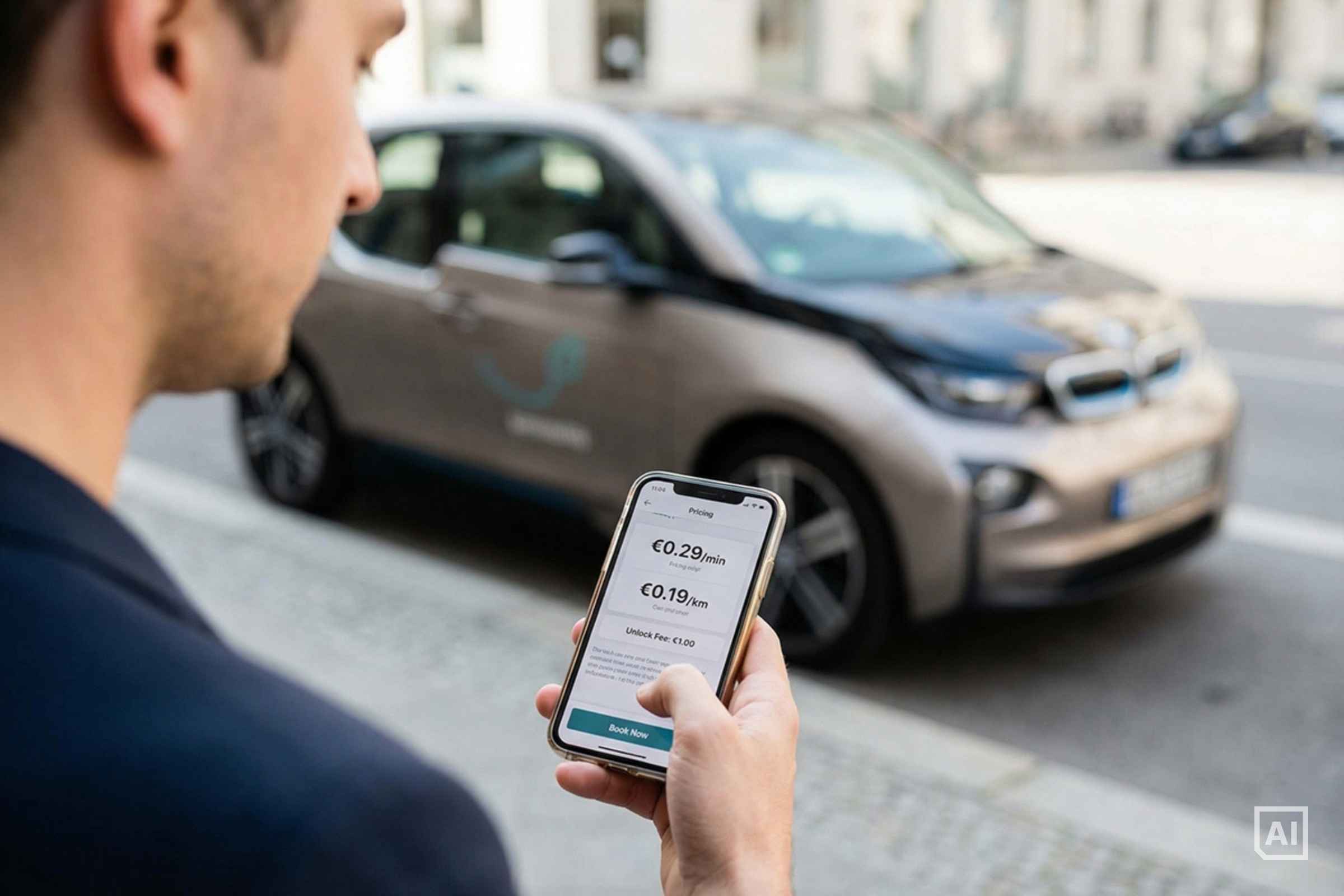
Car sharing pricing combines time, distance, and fixed fees to cover operational costs while giving users flexibility. Unlike traditional car rental with its layered add-ons, car sharing typically offers all-inclusive rates where customers pay one price covering fuel, parking, and insurance.
In this lesson you'll learn about the different pricing models, what to consider when designing your pricing structure, and emerging trends in the industry.
Why All-Inclusive Pricing Matters
For customers, this structure removes guesswork. When they book a vehicle, they don't calculate separate costs for refueling or worry about parking tickets within the service area.
For you as the operator, this simplicity demands careful calculation. Your visible price must be easy for users to understand, but robust enough to cover all hidden operational costs while generating profit. Finding this balance is one of the most critical steps in building a sustainable business.
Defining the Building Blocks
Nearly every car sharing tariff is built from three core components: time, distance, and fixed fees. Understanding how these blocks fit together lets you build a pricing model that matches your specific business goals.
Time Component
This is the most visible part of your price. In free-floating models, this typically means a per-minute rate (e.g. €0.29/min), which works well for short, spontaneous trips. For business models with longer, planned journeys, operators often use hourly or daily caps. A daily cap ensures that once a user drives for several hours, the price stops climbing and switches to a fixed day rate. This prevents bill shock and makes the service competitive with traditional rentals.
Distance Component
Time covers the opportunity cost of the vehicle being unavailable to other customers. Distance fees cover energy costs and actual wear and tear. This usually appears as a per-kilometer charge (like €0.19/km). Many operators include a set number of free kilometers in their base packages to keep the offer attractive, only charging the distance fee after that limit. This approach balances fairness with simplicity. Users who drive long distances pay more to cover the added depreciation and fuel costs.
Fixed Fees
These are one-time charges that stabilize your revenue. The most common is an unlock fee (usually around €1.00 per trip), which helps cover transaction costs even on the shortest rental. Another powerful tool is the subscription model, where users pay a monthly fee (like €9.90/month) in exchange for lower usage rates and other perks. This generates predictable recurring revenue and encourages user loyalty.
Comparing Pricing Strategies
How you combine these blocks defines your pricing strategy. The most common approach is a time + distance model. By charging a lower base rate per minute and adding a per-kilometer fee, you align revenue with actual costs. This model is fairer to the customer stuck in traffic (paying only for time) and fairer to you when a user drives long distances (paying for wear). However, it can be harder for customers to mentally calculate their final cost compared to a simple flat rate.
Package Pricing for Longer Trips
For longer trips, package pricing is the industry standard for competing with traditional rentals. These are bundled offers, such as "3 hours + 50 km for €29." Packages provide cost certainty, which matters when users are planning a specific errand like a shopping trip or an airport run. They eliminate the anxiety of a ticking clock and encourage users to choose car sharing beyond short hops.
Subscription Models
Subscription models are increasingly popular for locking in frequent users. A customer pays a monthly fee to access discounted minute and kilometer rates or to remove things like unlock fees from their bill. This strategy turns occasional users into loyal customers who are less sensitive to price fluctuations because they've already committed to the platform. It stabilizes your cash flow and increases the lifetime value of your most active users.
Benefits of a Flexible Pricing Mix
For Operators
A flexible pricing mix is a powerful operational lever. The ability to adjust prices lets you actively steer demand and manage your fleet's distribution. By offering discounted rates for vehicles parked in low-demand areas, you can get users to move them to high-traffic zones. This user-based relocation reduces the need for expensive manual rebalancing by your street team, turning your customers into part of your operations workforce.
Flexibility also protects your margins. You can set higher rates for premium vehicles or during peak hours to capitalize on high demand, while offering lower rates for smaller models or off-peak times to keep utilization high. This dynamic approach ensures you're not leaving money on the table when demand is high, nor letting cars sit idle when it's low.
For Users
A mix of pricing options builds trust and fairness. A simple pay-as-you-go rate works perfectly for a spontaneous 10-minute trip, but becomes prohibitively expensive for a weekend getaway. By automatically capping prices or offering packages, you ensure the service remains a viable alternative to private ownership for every type of journey.
When customers know they'll always get the best price for their specific trip, they're more likely to rely on your service for all their mobility needs, rather than just occasional emergency use.
Common Challenges in Pricing
For Operators
Setting the right price involves more than matching competitors. You have to master your own unit economics. The biggest challenge is ensuring the visible price covers all the invisible costs buried in the service.
Your per-minute or per-kilometer rate must account for fixed costs like vehicle financing and insurance, plus variable costs like fuel, cleaning, and platform fees. If your pricing is too aggressive in an attempt to win market share, you risk operating at a loss on every trip.
In highly competitive markets like Taiwan, OEM-backed operators like GoSmart (backed by Nissan) often use their financial resources to drive prices down, sometimes even below the cost of scooter sharing. This aggressive strategy forces independent operators to lower their rates to unsustainable levels, threatening their profitability and risking market consolidation.
Source: Global Car Sharing Perspective - Taiwan
For Users
Managing user psychology to avoid bill shock is a major hurdle. Complex pricing structures with hidden fees or confusing terms can alienate customers. Users need confidence that they understand what they'll pay before they unlock the car.
When a simple 20-minute trip turns into an expensive ordeal due to unexpected traffic or opaque surcharges, trust breaks down. To address this, leading operators use smart caps or automatic best-price algorithms that switch a user to a cheaper package if their trip runs longer than expected, protecting the customer from accidental overspending.
The Future of Pricing
Pricing in car sharing is becoming increasingly intelligent and automated. The most significant trend is the shift toward dynamic pricing, similar to surge models used by ride-hailing apps but applied more subtly. Instead of just reacting to high demand with higher prices, future systems will use AI to predict demand patterns days in advance. This allows operators to adjust prices proactively, offering lower rates on a Tuesday morning to stimulate usage or slight increases during a major city event to manage availability.
Key Takeaways
How is car sharing pricing different from traditional car rental?
Car sharing pricing is typically all-inclusive. The visible rate covers fuel, insurance, parking, and maintenance, removing the complexity of separate add-ons found in traditional rentals.
What are the main parts of a car sharing tariff?
Almost every price is a mix of Time (minutes, hours, days), Distance (kilometers driven), and Fixed Fees (unlock fees or subscriptions).
Why should I use Time + Distance pricing?
This model aligns revenue with actual costs. The time fee covers the opportunity cost of the car being unavailable, while the distance fee covers wear, tear, and fuel.
How does Package Pricing benefit the user?
Packages (like 3 hours + 50km) provide cost certainty. They remove the anxiety of a ticking clock and make car sharing a viable option for longer, planned trips.
Why should I use flexible pricing for my car sharing service?
It allows for demand steering. Operators can lower prices in low-demand areas to incentivize users to move vehicles to high-demand zones, reducing the need for expensive manual rebalancing.
What is the risk of dynamic pricing?
If not managed carefully, dynamic pricing can cause bill shock and erode trust. Successful systems use price caps or clear communication to ensure users always feel they're getting a fair deal.