

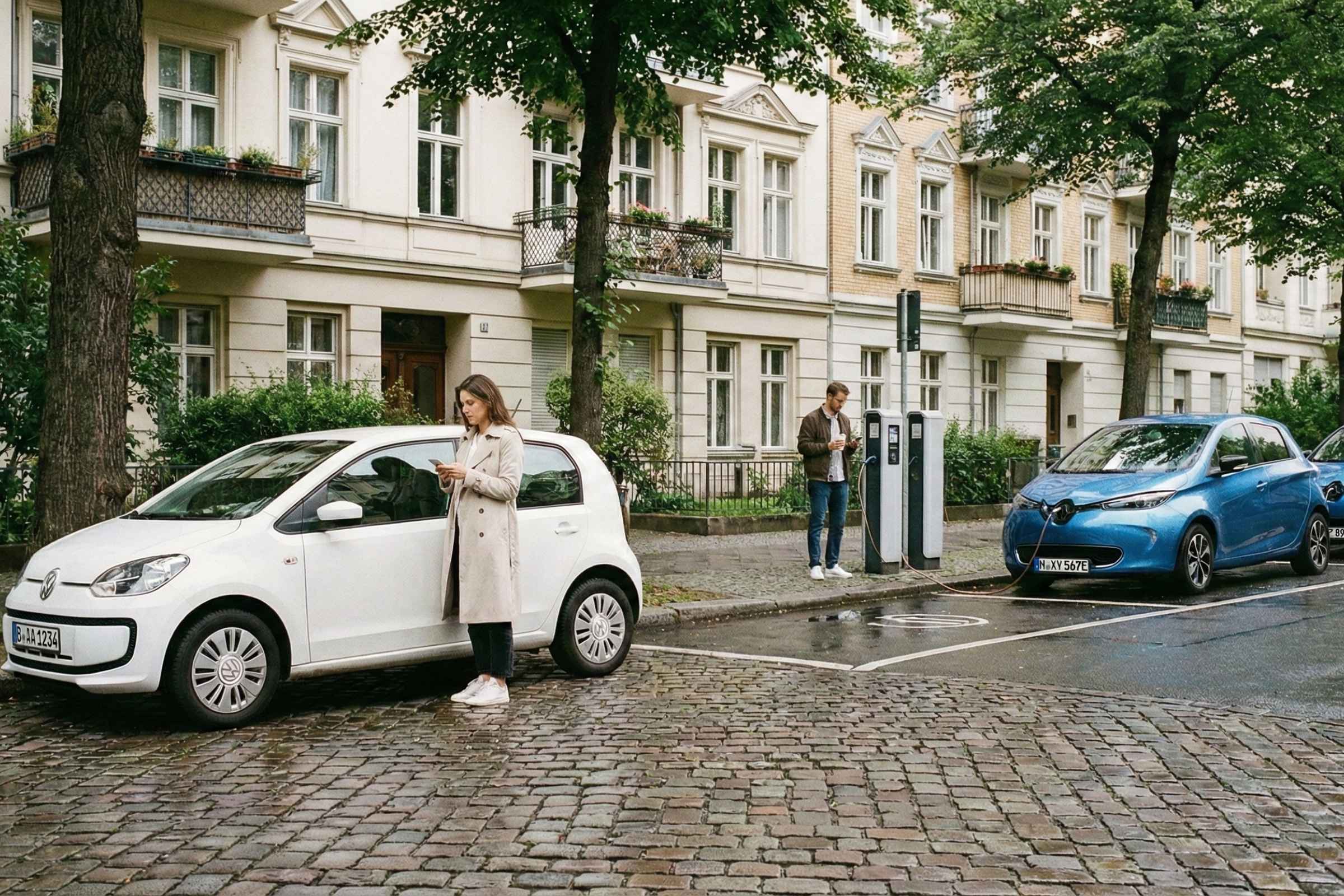
A car sharing business model defines how vehicles are accessed, used, and returned by customers. Your choice of business model shapes everything from fleet size and technology requirements to target audience and pricing strategy.
In this lesson, you'll learn about the fundamental car sharing models that form the foundation of nearly every service worldwide. Understanding these options is the first step toward building an operation that fits your market and goals.
Station-Based: The Round-Trip Model
Station-based car sharing requires users to pick up and drop off vehicles at designated parking spots. You'll typically return the car to the same station where you started. This creates predictability for both operators and users. Vehicle availability is known and guaranteed at specific locations.
This model fits well for planned trips like weekend getaways or grocery runs where you know you're coming back to the same spot.
Opportunities
- Fleet management becomes predictable. You know where your vehicles are and where they'll be returned
- Maintenance is simplified when vehicles return to fixed locations
- Pricing structures are clear and straightforward
- Electric vehicle charging infrastructure is easier to integrate at fixed locations
Challenges
- Users have less flexibility. The round-trip requirement can be limiting for some use cases
- Establishing and maintaining dedicated parking stations requires significant investment
- Poor station placement leads to low vehicle utilization
Free-Floating: The One-Way Model
Free-floating car sharing offers maximum flexibility. Users can pick up and drop off vehicles anywhere within a defined service area. There's no need to return to a fixed station.
This one-way flexibility works perfectly for spontaneous, short trips like commuting or running errands across the city.
Opportunities
- Users enjoy high convenience and accessibility. The car is where they need it, when they need it
- No expensive station infrastructure is required
- The service fits naturally into dense urban environments where parking is fluid
Challenges
- Fleet management becomes complex. You need to rebalance vehicles constantly to prevent clustering
- Competition for public parking can be fierce in busy cities
- Vehicles tend to cluster in desirable locations, creating service gaps elsewhere
Peer-to-Peer (P2P): The Sharing Economy Model
The peer-to-peer model leverages the sharing economy. Private car owners rent out their personal vehicles through your platform. You don't own the fleet. You operate the platform that connects car owners with renters. This significantly lowers the initial capital needed to start a service because you're not purchasing vehicles yourself.
Opportunities
- Startup costs are low. You're building a platform, not buying a fleet
- Scaling happens fast without large fleet investments
- Users get access to a diverse range of vehicles
Challenges
- Quality control is harder across many privately owned vehicles with different maintenance standards
- Insurance and regulatory requirements become complex when you're facilitating rentals between private parties
- Building trust between car owners and renters requires careful platform design and policies
Corporate Models
Corporate car sharing is a separate but related model. Services are tailored specifically for businesses to manage employee travel. This B2B approach provides a cost-effective alternative to company cars.
Opportunities
- Corporate fleets can be more profitable. Stable, long-term contracts reduce uncertainty
- Businesses reduce their fleet costs significantly
- Companies meet sustainability goals by offering shared and electric vehicles
- Employee satisfaction and mobility improve when workers have flexible access to vehicles
Challenges
- Customization can be labor-intensive. Each corporate client may need integration with their internal systems
- Gaining initial corporate clients is difficult. Businesses are cautious about changing their fleet management
- Vehicle misuse or unreported damage is a risk when multiple drivers share vehicles
Conclusion: Choosing the Right Model
Your business model choice depends on your specific market conditions. Consider urban density in your target area while looking at typical user behavior patterns. Understand local regulations and know your initial capital constraints.
The key is matching your model to the needs and habits of your target users. Carefully weigh the operational trade-offs of each approach. No single model is universally best. The right choice is the one that fits your market reality.