Insights Interview on Free-Floating Car Sharing with Bolt Drive
Summary
We interviewed Diego Ramirez-Gölz, Regional General Manager Central Europe, on his expertise in free-floating car sharing with Bolt Drive across Europe. He shared valuable insights into addressing different market segments and user groups, as well as the role of platform usage within Bolt Drive. Bolt Drive operates its own cars in the Czech Republic, Estonia, Germany, Latvia, and Lithuania, but also partners with other local fleets. Beyond car sharing, Bolt is also known for ride-hailing, food delivery, and shared micromobility.

The European car sharing market is complex, featuring a diverse range of business models implemented on the streets. Operators employ various strategies, such as station-based services, peer-to-peer car sharing, and free-floating services, to address distinct use cases and offer distinct services. In addition, the European car sharing market is one of the largest and the most complex in the world. To address and explain some of these complexities, INVERS publishes their INVERS Mobility Barometer on “European Car Sharing 2025”. This 70-page report helps car sharing operators quickly understand key market dynamics, insights, and trends.
Table of Contents
Tell us more about the Bolt ecosystem approach. Of your Bolt Drive users, how many also use your other services, such as ride-hailing, shared micromobility, and food-related services?
At Bolt, we think in user journeys. Whether it’s a five-minute e-scooter trip, a ride-hailing pickup to the airport, or a spontaneous weekend getaway via Bolt Drive: Our goal is to be the go-to app for every urban mobility need. And it works: in our mature markets, one in three Bolt Drive users also frequently uses another Bolt service, most often ride-hailing. This multi-service engagement is no coincidence; it’s core to our expansion logic. We only launch Bolt Drive where we already have strong local traction. That gives us a powerful head start and a unique growth engine: every Bolt user is a potential car-sharing customer – if not right away because they are too young, then definitely in the future. The more services we offer in a city, the more likely users are to leave their private car behind.
What percentage of your users first interact with Bolt through Bolt Drive?
Since our car-sharing product is currently only introduced in markets where Bolt already operates other services (ride-hailing or micromobility) the share of users who first engage with Bolt through Bolt Drive is relatively low. Our strategy prioritizes markets where we already have strong brand presence and existing user trust. This allows us to launch car-sharing services with built-in reach and credibility, reducing customer acquisition costs and quickly reaching solid utilization rates. While the said number is rather low, Bolt Drive plays an important role in expanding the value we offer – enabling users to meet longer-distance or higher-flexibility mobility needs within the same platform.
MaaS (Mobility-as-a-Service) comes in many forms. Could you describe Bolt’s MaaS approach and explain how you would characterize user demand for external mobility services through your app?
Bolt’s MaaS approach is rooted in pragmatism and partnership. In selected cities, we integrate external fleets into the Bolt app to expand choice and coverage – while helping partners access our demand. We currently operate two integration models:
- Deep software integrations, where the partner fleet appears directly in our app (e.g. with MILES in Germany), and
- IoT-based integrations, where we install our own hardware in partner vehicles, enabling exclusive access and seamless user experience (e.g. with Admita in Lithuania).
In both cases, Bolt facilitates the trip and acts as the marketplace. This model allows us to build localized ecosystems while keeping our platform agile and responsive to market needs. Our users gain access to thousands of vehicles they otherwise wouldn’t find in one place. Partners get access to Bolt’s users and generate additional demand. Cities get a modal shift. Everyone wins.
Among the five car sharing markets in which Bolt Drive is currently offered, what differences in user behavior and operations do you observe?
While Bolt Drive operates under one brand, mobility is deeply local. In the Baltics, car-sharing is largely functional – used for commuting or utility trips.
In Western and Central Europe, it’s more lifestyle-oriented – weekend getaways or flexible mobility for car-free households. The policy context matters too: onboarding is faster and more secure in markets where we can access government registries to verify user data. That’s not the case everywhere. And behaviors vary as well: in some Western cities, vandalism and smoking inside vehicles are recurring issues, while in others we may face other challenges. One issue we see across all markets is speeding – especially among young users – which we take very seriously, applying technological and operational measures to address it. Understanding these patterns helps us optimize safety and service quality for our users.
Which new technology would push car sharing forward the most if you could have it by tomorrow?
Often our users contact our CS support because of dashboard warning signals. Some of those touchpoints – which are time-consuming for the user and generate costs for Bolt – are unnecessary and turn out to be because the user does not fully understand their meaning. This is perfectly fine because it’s our role to help the user but I believe that the vehicle infotainment system and Gen AI could play a better role here and directly help the user in case of doubt, e.g. through voice. Some OEMs are actively addressing this. If we extend this thought, other hints from the car-sharing operator could be delivered via voice, especially while the user is on his ride and should not have the phone on his hand to use our app.
Further insights into the European car sharing market
Thank you, Diego, for sharing your expert insights.
For more information and interesting findings about European car sharing, we encourage readers to check out our upcoming 70-page INVERS Mobility Barometer on “European Car Sharing 2025” with more expert interviews as well as insights from national car sharing associations. To discover more from Bolt Drive, please visit their website.
Related Posts
Car Sharing, Expert Interviews
GoMore’s Perspective on P2P Car Sharing in Europe
We interviewed Thomas Christensen, COO of the GoMore Group, on his expertise in P2P car sharing. He shared valuable insights on, for example, learnings from running operations across 11 countries and different vehicle types on their platform.
Car Sharing, Technology
The Hidden Cost of Reactive Maintenance in Car Sharing
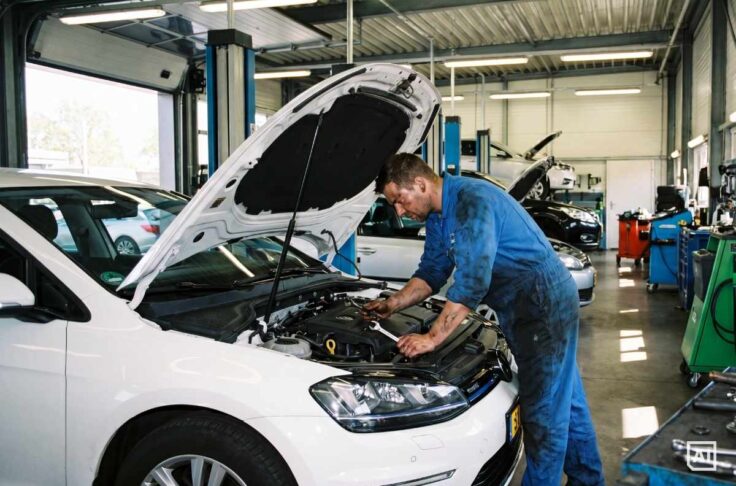
Warning lights and missed alerts cost car sharing operators thousands per month. Here's how to cut maintenance tickets by 70%

Car Sharing, Technology
How Can Vehicle Health Data Improve Your Car Sharing?
We share our top 5 uses cases for using vehicle health data on warnings lights and service due dates to cut support calls, prevent breakdowns, and keep workshop service intervals on track.