
How the County of Ventura Brought Its Motor Pool into the 21st Century


Fleet Background
Most government motor pools begin with a central location and a small fleet and expand outward as demand grows.
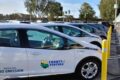
The County of Ventura took a different approach. It delivers services directly to residents across 2,200 square miles of coastal, suburban, and rural areas. Its fleet was built the same way from the start, when vehicles were distributed where they were needed rather than scaled from a single hub.
Over time, the model stayed the same, but the technology adapted and changed.
Problem: From access to constraint
Before 2009, the County of Ventura managed its fleet like many governments: vehicles were assigned to departments, and access meant coordinating with whoever had the keys.
To modernize, Ventura introduced systems to make sharing easier. The main motor pool used INVERS KeyManager for physical keys, while remote sites used INVERS iBoxx for access without staffed offices or key boxes.
Central staff collected keys from the KeyManager; remote staff used RFID (radio-frequency identification) cards. This setup cut administrative overhead, reduced friction with key handoffs, and made vehicles more accessible countywide.
For a while, that was enough. But new limitations emerged. As Robert Crawford, Fleet Services Manager, said: “Whoever controls the keys controls the car.” Some employees booked cars early just in case, holding keys to vehicles they might not use. Others returned cars but walked away with the key in their pocket.
Individually, these moments seemed minor. Collectively, they meant vehicles sat unused in the lot while reservations looked full, even when cars weren’t on the road. On paper, everything looked busy.
Operationally, something didn’t add up.
Solution: From two systems to one
Then the technology changed, and so did the picture.
When INVERS discontinued KeyManager and iBoxx, Ventura County chose INVERS CloudBoxx with Launch Mobility’s reservation app to move from physical keys to fully digital, reservation-based access.
Vehicle access became tied to reservations and managed digitally. The shift took just over a year and required close coordination for installation, testing, and staff training.
County technicians worked with INVERS to validate installations across a diverse fleet that included ICEs, EVs and plug-in hybrids.
INVERS gave us the opportunity to expand to remote locations with the KeyManager and the iBoxx systems, and we were able to start proliferating at sites, remote sites.
Robert Crawford, Administrative Manager of Fleet Services, County of Ventura.
Meanwhile, Launch Mobility tailored the reservation app to public sector workflows, reporting, and vehicle types.
The result wasn’t just a replacement, but a more connected, visible, and efficient fleet management system.
Seeing what was always there
With the entire fleet connected, the team could finally see something they hadn’t been able to measure before: the difference between a vehicle being reserved and a vehicle being used.
What looked like high demand turned out, in part, to be a byproduct of how access was managed. Once that was clear, the team made small but meaningful adjustments.
They set automatic reservation rules: when a vehicle returns and the reservation ends, a timer starts. If the car sits idle for an hour, the booking closes automatically, making it available to others.
The result, as Fleet Supervisor Aron Ruiz explained: vehicles were used more throughout the day, reservations became shorter and better matched to needs, miles driven increased, and the data finally reflected reality.
When data challenges assumptions
Once the team had a clearer picture of usage within the motor pool, they began sharing those insights with other departments across the county, and that’s where the next set of changes began.
The Healthcare Agency, for example, reviewed its fleet data and found that nearly half of its vehicles had monthly utilization of less than 25%. As a result, it reduced its fleet by 29 vehicles.
Robert Crawford
The Human Services Agency saw similar patterns and cut four vehicles after gaining clear, consistent insight into usage.
The Fleet Services team is now working to track failed reservations, identifying how often employees search for vehicles but find none available. The team is collaborating with Launch Mobility to build this feature, which will help pinpoint where more vehicles are truly needed.
Together we ensure frontline public servants have the tools necessary to more easily do their great work. It’s about the mission of the community.
Nick Villasenor, CRO Launch Mobility
Beyond utilization: accountability and planning
For public fleets, understanding usage means not just efficiency but accountability. Many vehicles are tied to funding programs that require detailed tracking, often down to individual vehicles and trips.
With a connected system, reporting is easier: access events, trip records, and usage data are captured automatically, reducing manual tracking and simplifying reports.
Infrastructure before vehicles
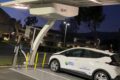
Ventura County’s electrification strategy was simple: infrastructure first. Telematics data, including miles driven, fuel use, and trip patterns, identified which vehicles and sites were ready for electrification and where chargers were needed. As Robert Crawford notes, buying EVs without reliable charging risks underutilized assets, so infrastructure planning led the way.
That data-driven approach also shaped charger deployment. Programs like Southern California Edison’s Charge Ready offset installation costs, while solar-powered off-grid charging filled gaps where traditional infrastructure wasn’t feasible. Electrification has since expanded, with battery-electric and plug-in hybrids deployed where data showed they’d succeed.
State mandates now require heavier-duty vehicles to transition by 2035, about 255 units in Ventura’s fleet, including dump trucks, spray trucks, and other heavy equipment. The challenge has shifted from determining where electrification makes sense to scaling it across vehicle types, infrastructure constraints, and funding, all without disrupting vital services.
Fifteen years in the making
Ventura County’s mission hasn’t changed, but its visibility into how the fleet operates has. Decisions once based on estimates are now grounded in shared, real-time data, giving the team a clearer understanding of actual usage across the county.
Related Posts
Car Sharing, Technology
The Hidden Cost of Reactive Maintenance in Car Sharing
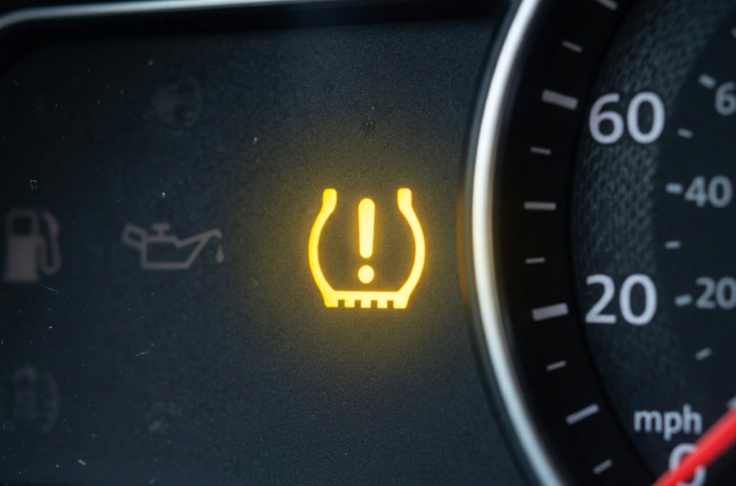
Warning lights and missed alerts cost car sharing operators thousands per month. Here's how to cut maintenance tickets by 70%
Car Sharing, Technology
How Can Vehicle Health Data Improve Your Car Sharing?
We share our top 5 uses cases for using vehicle health data on warnings lights and service due dates to cut support calls, prevent breakdowns, and keep workshop service intervals on track.

Car Sharing, Expert Interviews
Car Sharing & Public Transport: Mobility beyond traditional mass transit
We talked to Vincent Neumayer, Executive Assistant for Public Affairs at Wiener Linien, about car sharing and public transport. Find out how car sharing and public transport can complement each other and evolve into a concept of public mobility.