

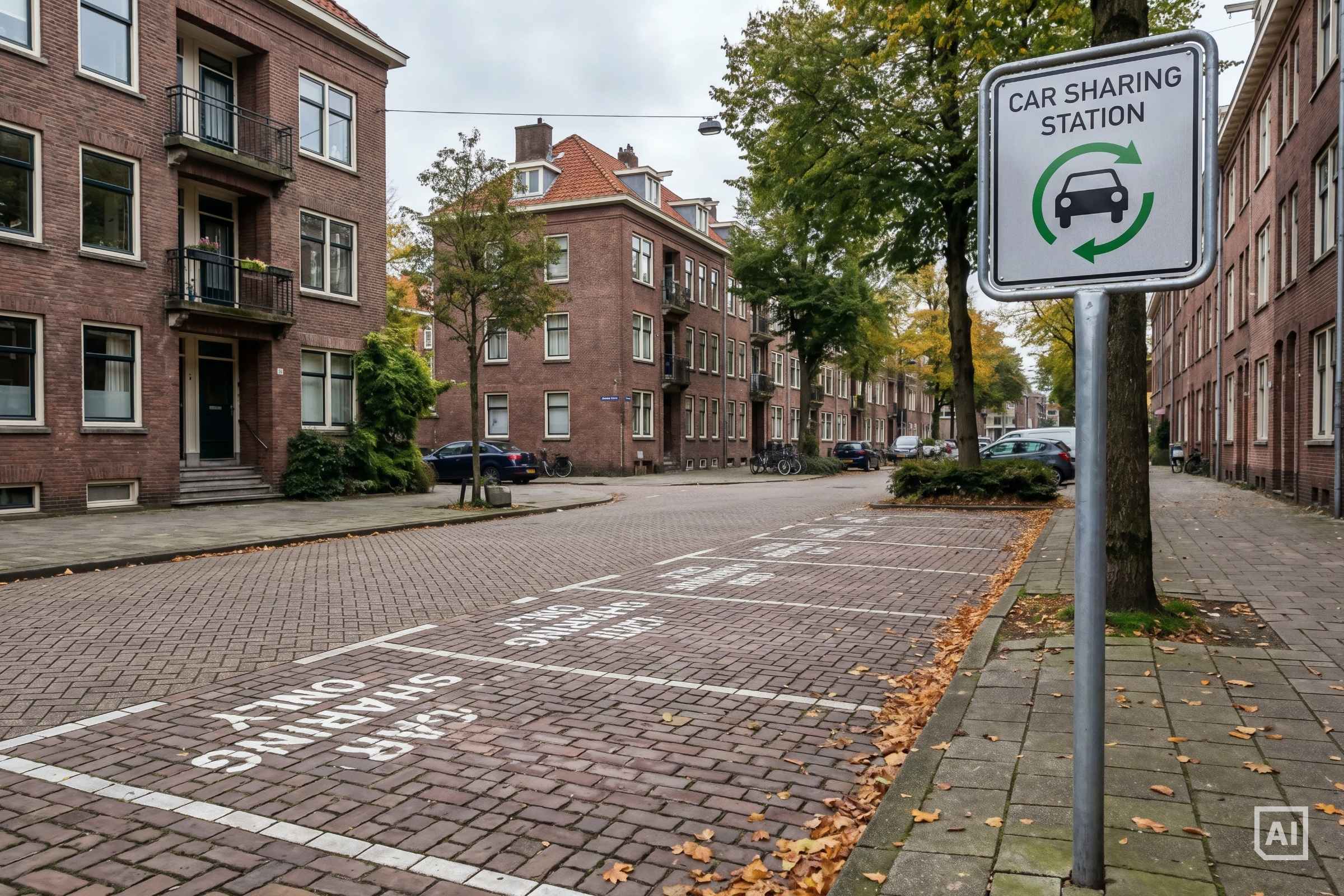
Fleet rebalancing in car sharing means moving vehicles from zones where supply has piled up to zones where demand is running short. Left unmanaged, this imbalance compounds through the day. Vehicles accumulate in residential areas as commercial zones run dry, and they stack near airports before departures only to disappear once arrivals begin.
In this lesson, we'll cover how the rebalancing challenge differs by business model and the four core strategies operators use. We'll also look at when to run static versus dynamic operations, two specialized scenarios worth planning for, and the metrics that show whether your approach is working.
How the Challenge Differs by Business Model
The scale of the rebalancing problem depends on how your service is structured.
"There's a need to move cars from A to B with the goal of having the right car at the right place at the right time. And for that, rebalancing is needed."

Clemens Schönberger
Director of Field Operations | Free2Move
Source: Webinar Recap: Enhancing Car Sharing Operations Through Technology
In station-based car sharing, vehicles return to their home station after each trip, which keeps the accumulation problem more contained. Deliberate positioning still matters, though. Operators may add vehicles to a station before a major local event, or swap vehicle types between locations to match demand: more vans near a furniture store, smaller cars in the city center.
Free-floating car sharing is a harder problem to manage. Customers can end a trip anywhere within the operating zone, so vehicles migrate unpredictably. There is no station target to recover, only a supply-and-demand gap that shifts hour by hour. Free-floating operators typically need more real-time data, more frequent moves, and more flexible labor.
Source: Webinar Recap: Enhancing Car Sharing Operations Through Technology
Four Core Strategies
The four approaches below are not mutually exclusive. Most mature operators run a combination, adjusting the mix as their fleet and operating area grow.
1. Operator-Based (Paid Staff)
Your own staff drive vehicles from oversupplied zones to undersupplied ones. Common approaches include single-driver moves where the driver leaves the car and returns by public transport, shuttle teams that sequence multiple pickups, and planned routes that batch several relocations efficiently.
Operator-based rebalancing is often done at night. It is easy to control and straightforward to implement. It's also the most expensive option, particularly as fleet size grows.
2. User-Based (Customer Incentives)
Instead of moving vehicles yourself, you shape where customers end their trips with priced zones where you charge a fee for ending in low-demand areas or offer a discount for ending in high-demand areas.
Pricing zones work gradually, shaping behavior across many trips rather than solving today's imbalance immediately. Over time, they reduce the volume of staff-driven moves required.
3. Crowd-Based (Gig Workers)
Gig workers move vehicles for a fee, typically through a dedicated platform. They are neither employees nor customers, but a third labor pool that scales without expanding your headcount or fixed costs.
The effectiveness of this model depends on the depth and reliability of the worker pool. Quality control and consistent execution rely on how well the underlying platform manages its community.
4. Predictive Optimization
Behind all three approaches above is an algorithm that decides which vehicles to move, where, and when. Inputs typically include demand forecasts, zone mapping, idle-time tracking, and real-time supply-demand matching.
Most operators don't build this in-house. The practical question is whether to develop in-house optimization, buy a managed rebalancing service that provides both the algorithm and labor fulfillment, or partner for the labor side while keeping decisions internal. The same in-house-versus-outsourced logic that applies to fleet maintenance applies here.
Static vs. Dynamic Operations
Static Rebalancing
Done overnight or during low-rental windows when vehicles are not in active use. Easier to plan, cheaper to execute, and lower in opportunity cost since you are not pulling cars away from potential bookings.
Dynamic Rebalancing
Done in real time during operating hours, responding to live demand shifts. Harder to execute and more expensive per move. Most operators combine both approaches: static rebalancing handles the bulk overnight shift, dynamic fills the gaps during the day.
The timing-flexibility tradeoff matters for your budget. A move with a broad time window (by end of day, for example) is easy to assign and batch with other tasks. Deciding which moves genuinely need to happen fast has a direct effect on what rebalancing costs.
Two Scenarios Worth Planning For
Airport Flows
Airports have a predictable rebalancing rhythm: early morning departures, evening arrivals, and seasonal peaks around summer and public holidays. Common challenges include parking overflow, enforcement risk, and, in many cities, formal agreements with airport operators that govern where vehicles can be parked.
If an airport is a significant part of your operating area, it's worth asking any rebalancing partner whether they have dedicated logic for airport patterns. The volume and predictability can make specialized approaches worthwhile.
EV Fleets
For electric vehicles, rebalancing is not purely spatial. A vehicle with low charge may need to visit a charger before it can serve the next booking. Every relocation decision must weigh getting the vehicle to demand against getting it charged first.
Rebalancing services that work with EV operators often pair with charging operations to address this together. EV charging is covered in more depth in the next lesson in this module.
The Data Foundation
Every rebalancing strategy depends on the quality of the data you collect on your fleet. Without reliable telematics feeding your system, you cannot forecast demand, detect imbalance, or measure whether rebalancing is producing results.
INVERS provides the telematics and data platform layer that operators feed into rebalancing decisions. It does not offer rebalancing as a service. Operators using INVERS data can route it into in-house systems, third-party rebalancing services, or a combination of both.
Metrics That Matter
Rebalancing is a cost center. The goal is to generate more revenue from better vehicle placement than the rebalancing operation itself costs.
Three metrics are worth tracking alongside that cost:
- Idle time:
how long vehicles sit unused between bookings. Lower is better - Trips per vehicle per day:
a direct measure of fleet utilization. This number is the most sensitive to rebalancing quality - Parking fines and enforcement costs:
in cities with strict parking rules, these can be substantial. Track them as a component of your true operational cost
If rebalancing costs more than it recovers in additional revenue, something needs to change in the volume of moves, the methods, or both.
Key Takeaways
What is fleet rebalancing in car sharing?
Fleet rebalancing means moving vehicles from zones with excess supply to zones with excess demand. Without it, vehicles accumulate in the wrong places and customers cannot find a car where they need one.
Why is rebalancing harder for free-floating operators?
In free-floating car sharing, customers can end a trip anywhere in the operating zone. There is no station target to recover, which means imbalances build continuously and require real-time data and flexible labor to address.
What are the four core rebalancing strategies?
Operator-based (paid staff), user-based (pricing zones and active prompts), crowd-based (gig workers), and predictive optimization. Most operators use a combination rather than relying on a single approach.
What is the difference between static and dynamic rebalancing?
Static rebalancing moves vehicles overnight when they are not in active use. Dynamic rebalancing runs during operating hours to respond to live demand. Most operators run both.
What metrics show whether rebalancing is working?
Track idle time, trips per vehicle per day, and the direct cost of rebalancing operations. If rebalancing costs more than it recovers in additional revenue, the approach needs adjustment.