

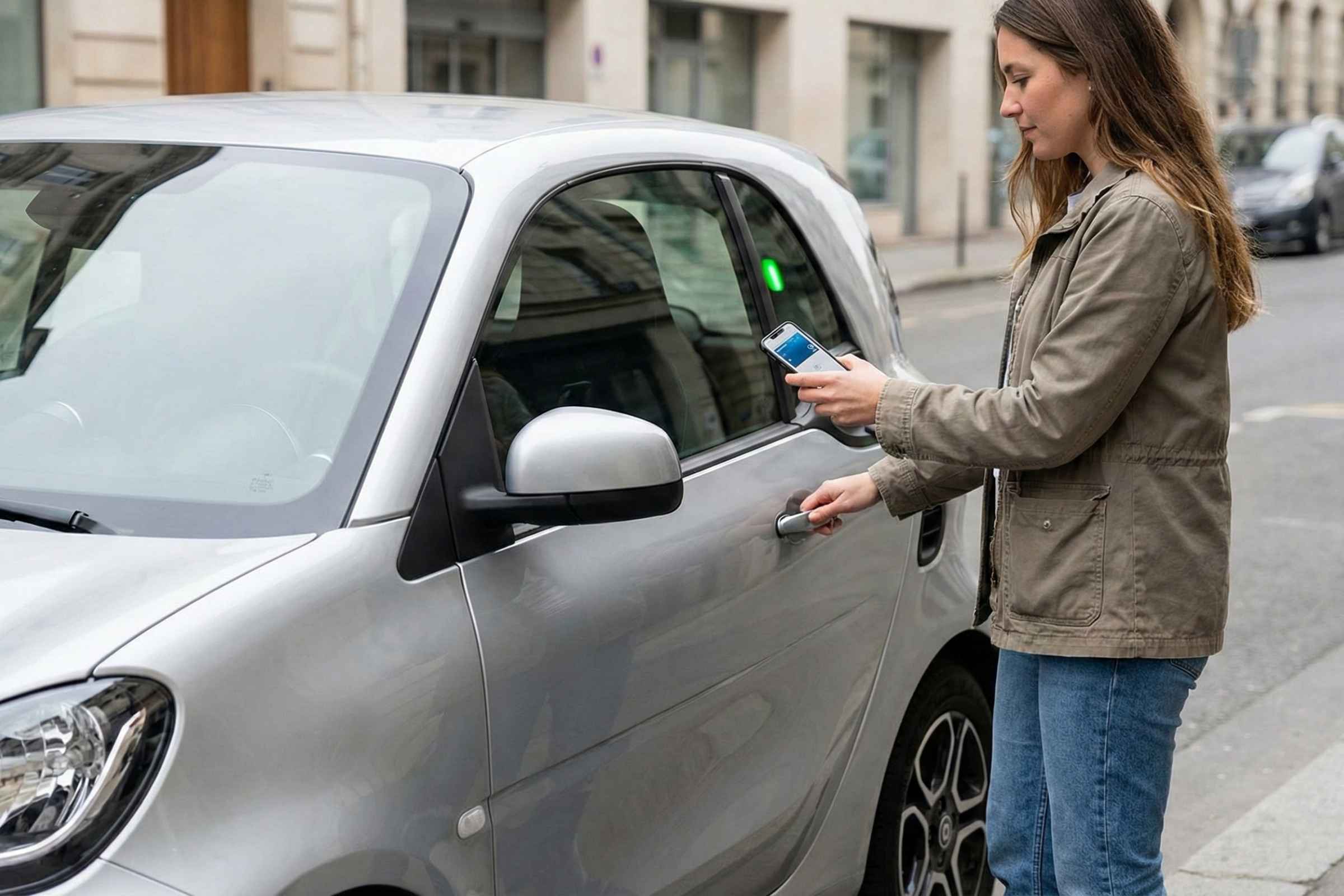
Keyless access has become the essential standard in modern car sharing, defining the convenience, security, and scalability of your service. The industry relies entirely on the digital key to deliver the immediate, 24/7 experience customers expect.
In this lesson, we'll explore the different access technologies available and show you how to set up keyless access in your fleet.
Access Technologies: Your Options
1. Physical Key Handover
This involves an in-person exchange of the physical key, common in traditional rental or older peer-to-peer models. While simple initially, it prevents spontaneous, 24/7 service and introduces significant staffing costs. This method is not viable for modern, scalable car sharing businesses.
2. RFID and NFC Access
Radio Frequency Identification (RFID) and Near Field Communication (NFC) systems offer the first level of automation. Users unlock the vehicle by tapping a physical card against a reader installed in the car. This eliminates staff handover but still requires users to carry a dedicated card, which can be lost or forgotten. The physical key must also be secured inside the vehicle, creating a security vulnerability.
3. Digital Key / Smartphone Access
This is the industry standard. The user's authenticated mobile app communicates with a telematics device installed in the vehicle to lock, unlock, and enable the ignition. This method uses cellular (for remote commands) and Bluetooth (for reliable local access, especially in underground parking). The digital key provides the highest level of user convenience and operational control.
How the Digital Key Works
The digital key is a virtual replacement for a physical key and the interface connecting your vehicle to your operational software platform. This system relies on sophisticated hardware and software integration.
CAN Bus Integration
The most robust method involves hardwiring the telematics device to the car's CAN bus (Controller Area Network). The CAN bus is the vehicle's central nervous system where all electronic components communicate, including the central locking system and immobilizer. The telematics device translates smartphone unlock commands into the specific language the vehicle understands.
OEM Telematics Alternative
Some vehicles offer native ex-factory OEM telematics through a manufacturer's API. This bypasses third-party hardware entirely, provided the vehicle has pre-installed telematics and the manufacturer's API permits remote control.
Source: INVERS Success Story with GoMore
Why Vehicle-Agnostic Technology Matters
A robust digital key system must be vehicle-agnostic, integrating with a vast range of vehicle makes and models, including modern electric vehicles (EVs) and newer data standards like CAN FD. This flexibility is essential for fleet growth. Relying on technology limited to specific manufacturers restricts your purchasing options and can lead to costly platform changes.
Operational Benefits of Keyless Systems
Digital key systems deliver fundamental improvements across your operations:
- 24/7 Self-Service:
Enables immediate, unattended pick-up and drop-off - Real-time Access Control:
Instantly grant or revoke user access for managing reservations and security - Remote Immobilization:
Remotely disable vehicles in case of theft or unauthorized use - Simplified Fleet Expansion:
Automates logistics for every new vehicle added - Remote Vehicle Status Checks:
Instant checks of door locks, ignition, and battery/fuel levels
Benefits Across Business Models
Keyless access powers free-floating services with seamless, anywhere-access for spontaneous rentals. For station-based hubs, it eliminates key desk staff. In corporate fleets, it enables efficient pooling with clear audit trails. And peer-to-peer platforms benefit significantly:
"Keyless access is a major enabler of P2P carsharing. It makes the service truly on-demand: drivers can book, unlock, and return a car with their smartphone, without the friction of coordinating with the car owner.”

Marie Reboul
CEO | Getaround
Source: Insights Interview on Peer-to-Peer Car Sharing with Getaround
From the customer perspective, keyless access creates a seamless journey: "Click, get in, drive." Users go directly to the vehicle and leave immediately when done, confident the system automatically registers the return. This eliminates friction points like waiting in line or ensuring proper key deposit.
While physical keys are easily lost or duplicated, digital platforms grant and revoke access in real-time with continuous audit trails and remote immobilization for theft protection.
Implementing Keyless Access: Step-by-Step
Setting up a keyless access system requires coordination between software, hardware, and installation teams. The process breaks down into three stages:
1. Hardware Installation
For hardwired integration, the device is professionally installed in each vehicle, connecting to power, ignition, and the CAN bus. For OBD-II integration, the device plugs directly into the diagnostic port. With OEM telematics, no third-party hardware is needed.
2. Software and API Integration
Once hardware is installed, it connects to your car sharing software platform via an Application Programming Interface (API). The API allows your app to send commands (Lock, Unlock, Enable Ignition) and receive data (GPS location, fuel level, door status) from the vehicle.
3. Security and Immobilization Setup
A critical step is linking the access system to the vehicle's immobilizer. The immobilizer prevents the engine from starting without an electronic check. A professional keyless system keeps the immobilizer active until the user is authenticated and the rental begins. This ensures that even if someone breaks into the vehicle, they cannot start the engine without proper authorization.
Building for the Long Term
By executing these implementation steps and leveraging the operational advantages, you build a keyless access system that's robust for today and designed for long-term growth. Choosing a technology partner who offers hardware agility (4G/5G, Bluetooth) and specialized shared mobility expertise ensures your investment remains protected and your platform scales effortlessly with your business.
Key Takeaways
What are the main vehicle access technologies for car sharing?
The three main options are physical key handover (not viable for modern operations), RFID/NFC card access (first-level automation but requires physical cards), and digital key/smartphone access (the industry standard offering the highest convenience and control).
How does the digital key system work?
The digital key uses a telematics device that integrates with the vehicle's CAN bus or connects via the manufacturer's OEM API. It translates smartphone commands into vehicle-specific signals to control locks, ignition, and immobilizer systems.
Why is vehicle-agnostic technology important?
Vehicle-agnostic systems can integrate with diverse vehicle makes and models, including EVs and newer data standards. This flexibility protects your purchasing options and prevents costly platform changes as your fleet grows.
What are the core operational benefits of keyless access?
Keyless systems enable 24/7 self-service, real-time access control, remote immobilization for security, simplified fleet expansion, and instant vehicle status checks. These capabilities are essential for all car sharing business models.
What are the three stages of implementing keyless access?
Implementation involves hardware installation (connecting devices to the vehicle's systems), software and API integration (linking vehicles to your booking platform), and security setup (configuring the immobilizer to prevent unauthorized engine starts).