
How King County Modernized Its Motor Pool and Enabled 24/7 Vehicle Access for Over 800 Users
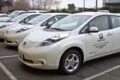


Table of Contents
Fleet Background
King County’s central motor pool serves over 800 of its 18,000 employees with a shared fleet of just 30 vehicles. This remarkable efficiency didn’t happen by chance; it’s the product of nearly two decades of smart modernization and a bold commitment to rethinking how government fleets operate.
Problem
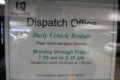
There was a time when getting a county vehicle meant planning your day around a garage schedule. The downtown Seattle office opened at 7:00 a.m., closed for lunch, and shut down at 3:30 p.m. A staff member ran the key wall. Employees who needed a vehicle outside those hours had no recourse. During peak times, lineups were routine.
For a county covering nearly 2,300 square miles, the limitations were real. Field staff couldn’t pick up vehicles early enough to reach remote sites. Evening workers had no after-hours option. Every access issue, every key problem, every scheduling conflict routed through one person at one desk.
“We could only issue motor pool vehicles from one garage, that forced people to come into the downtown core in Seattle just to pick one up.”
Chauntelle Hellner, Director of Fleet Services at King County
As demand grew and county operations expanded, the model began to actively limit what the program could deliver.
Solution
King County’s path to automation didn’t begin with a sweeping overhaul. It started with a key box.
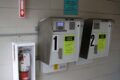
In 2007, the county adopted the INVERS KeyManager, electronic lockboxes that replaced the staffed key wall. Employees retrieved vehicle keys by entering an access code. After-hours pickups became possible.
For a few years, it worked. But the system had its ceiling.
Access codes ended up on sticky notes or buried in email threads. Network connectivity issues, particularly in covered parkades, occasionally knocked a box offline, forcing vehicles back to the main garage. The KeyManager did what the technology of its era could do.
By June 2011, King County introduced the INVERS iBoxx, a standalone system that connected directly to the vehicle to enable keyless access, vehicle tracking, and monitoring.
Where the KeyManager required physical infrastructure at each location, the iBoxx didn’t, enabling the fleet to be extended to remote offices and off-site locations. A pilot of nine vehicles grew to over 20.
The next step came when INVERS introduced the CloudBoxx, a hardware platform that enabled fully keyless, app-based vehicle sharing. When King County was presented with the option to transition in 2022, Chauntelle’s team saw it as an opportunity to move beyond keys entirely.
Implementation
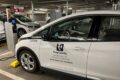
Working with INVERS hardware and WeGo’s reservation platform, King County deployed a fully automated, app-based motor pool. Employees reserve vehicles through the WeGo app, walk to the car, and unlock it via Bluetooth. No key box, no access code, no staff involvement at any point in the process.
Peter de Jong, Managing Director at WeGo, explains that reliability, not just convenience, was the design priority.
The INVERS hardware connects directly to the vehicle’s central locking system and immobilizer. A car cannot be driven without an active reservation, adding a layer of theft protection built into the workflow.
Bluetooth access operates locally between the driver’s phone and the in-vehicle hardware, eliminating one of the most common failure points in keyless fleet systems.
“The lock/unlock works with Bluetooth, locally from phone to hardware in the car,” Peter said. “That means it always works, even in underground parking with no cellular reception, unlike other hardware that sometimes uses cellular for lock/unlock, hence causing problems when out of cellular coverage.”
The same hardware handles GPS positioning, eliminating the need for separate tracking devices. Location, usage, and trip data are all visible in a single dashboard. Fleet administrators can assist users or adjust reservations remotely, from a smartphone.
A reservation system must be robust and reliable, else it will not be trusted by drivers. User satisfaction and usage numbers tell us that the trust was achieved.
Peter de Jong, Managing Director, WeGo
Results
What changed on the ground:
Access hours:
The most immediate change: time restrictions disappeared. County employees can now reserve and access vehicles at any hour, every day of the week. Field staff can pick up vehicles before dawn. Late-shift workers can return or retrieve a car without waiting for office hours.
“That has been a huge benefit to the overall experience of our user base,” Chauntelle said.
Location expansion:
With access no longer tied to a staffed or key box-equipped location, King County expanded from their downtown garage to five locations across the county, and more locations are under evaluation.
This expansion unlocked faster vehicle repositioning and better fleet utilization.
“When two seven-passenger vans sat underused at one site, our team moved them around the same day. It’s super seamless. We look at the utilization and adjust based on what we think our customers need.”
Chauntelle Hellner, Director of Fleet Services at King County
Key logistics:
Under the KeyManager system, closing a reservation required the user to remember their access code. Without it, the vehicle sat in limbo: physically in the lot, unavailable to anyone else, still accumulating rental time.
Drop boxes offered a workaround, but Chauntelle’s team processed those returns manually, roughly three times a week.
The CloudBoxx system eliminated that friction entirely. Keys stay in the glove box. There is no distribution process, no drop box to check, no code management.
Staff capacity:
The administrator who once spent significant portions of the day managing key logistics now conducts vehicle checks, handles customer support from a smartphone, and responds to user issues in the field. The job didn’t disappear; it changed, freeing capacity for better use.
Getting 800 users on board
The county’s team paid as much attention to change management as to the technology itself. They developed a multi-format training program, recognizing that users have different learning styles and that reluctance to change is normal.
Virtual training sessions became the source material for on-demand video modules built into King County’s HR learning system, with completion tracked. In-vehicle QR codes, printed user guides, and pamphlets covered users who needed quick reference support at the car.
“The flexibility in that training was super important for our customers,” Chauntelle said.
Many users arrived skeptical, but the system proved easier than most users expected. Five months after launch, a user satisfaction survey returned a 95% positive response rate. A follow-up survey in 2025 is tracking similarly.
Today, nearly all 800 users access vehicles through the mobile app. Two users access vehicles via key fob through the desktop portal, an accommodation that the system handles without special configuration.
Future-proofing motor pool fleet
The central motor pool is one piece of a larger picture. King County also operates dozens of smaller vehicle pools assigned to individual agencies, each managed separately, each carrying its own overhead and vehicles that often sit idle more than they’re used.
Chauntelle’s team is now using telematics data to map usage patterns across those pools, identify consolidation opportunities, and build the business case for expanding the shared, keyless model where the numbers support it.
The opportunity, Chauntelle said, is still ahead.
King County started with a key wall. Then a key box. Now, a system that runs without keys at all. The direction has been consistent throughout. The pace is picking up.
Are you looking for a long-term technology partnership for your motor poll and fleet sharing service? Then discover more success stories or contact us now.
Related Posts
Car Sharing, Technology
The Hidden Cost of Reactive Maintenance in Car Sharing
Warning lights and missed alerts cost car sharing operators thousands per month. Here's how to cut maintenance tickets by 70%
Car Sharing, Technology
How Can Vehicle Health Data Improve Your Car Sharing?
We share our top 5 uses cases for using vehicle health data on warnings lights and service due dates to cut support calls, prevent breakdowns, and keep workshop service intervals on track.

Car Sharing, Expert Interviews
Car Sharing & Public Transport: Mobility beyond traditional mass transit
We talked to Vincent Neumayer, Executive Assistant for Public Affairs at Wiener Linien, about car sharing and public transport. Find out how car sharing and public transport can complement each other and evolve into a concept of public mobility.