

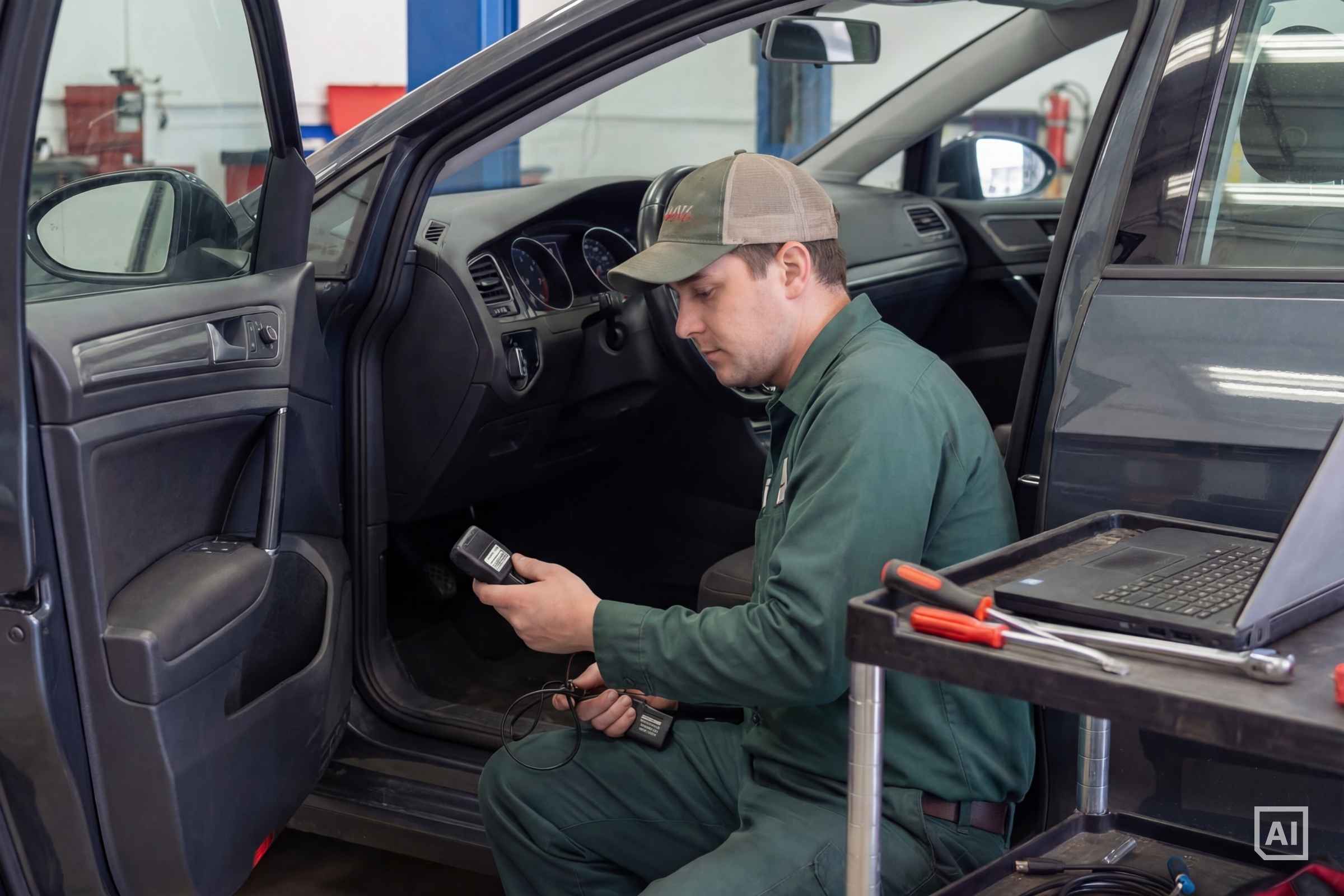
Getting your fleet technically connected is one of the most hands-on phases of launching a car sharing service. A vehicle with hardware installed is not the same as a vehicle that is bookable, trackable, and accessible to customers. The gap between those two states is where many launches lose time.
In this lesson, we'll cover the main telematics installation methods, when each one fits, and how to decide between an installation partner and in-house capability. We'll also look at designing a repeatable infleeting workflow and what user onboarding and verification need to include before you open your service to the public.
What Sharing-Ready Actually Means
A vehicle is sharing-ready when three conditions are met:
-
The telematics hardware is installed and communicating with your platform
-
The vehicle is configured in your fleet management software with the correct tariffs and zones
-
A customer can book and access it through your app with no manual step from your team
Each condition depends on the previous one. Many operators discover mid-launch that vehicles are installed but not fully configured, or configured but never tested end-to-end. A clear infleeting process closes those gaps before they affect your first bookings.
Choosing Your Installation Approach
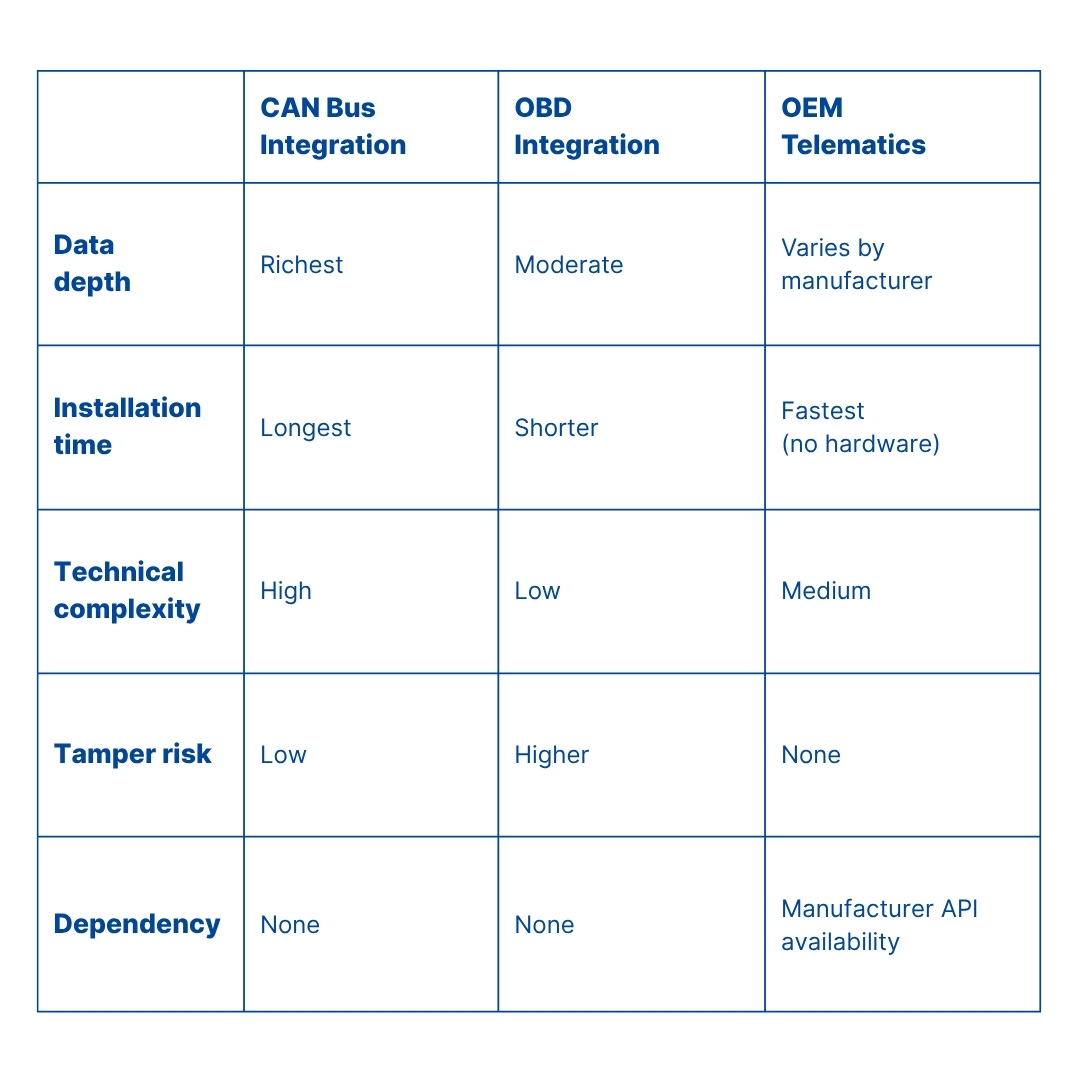
There are three main ways to connect a vehicle to your car sharing platform. The right one depends on your fleet composition, how permanent your setup is, and the features you need at launch.
1. CAN Bus Installation
A telematics device is installed directly to the vehicle's Controller Area Network (CAN), the internal communication system linking all electronic components. This approach supports the broadest range of features: remote immobilization, fuel and battery monitoring, trip data, and damage detection. It works across almost any vehicle make and model and is the standard choice for operators building a permanent fleet.
2. OBD Plug-in Devices
A plug-in device connects via the OBD-II diagnostics port and without any wiring. They are faster to install and remove, which makes them a practical fit for pilot fleets, temporary rentals, or testing a vehicle model before committing to a full installation. The tradeoff is potential exposure to customer tampering and, in most cases, a more limited feature set than hardwired units.
Source: Hyre uses Invers technology via OBD to power Car Rental 2.0 across the Nordics
3. OEM API Integration
Some vehicle manufacturers provide APIs that allow a car sharing platform to communicate with the vehicle's onboard systems directly, without additional hardware. This is most relevant for operators building a fleet around a single connected brand. Setup time per vehicle is minimal and there are no hardware costs, but you depend entirely on the manufacturer's API availability and the data it exposes.
Source: INVERS Success Story with GoMore
Most operators with mixed or multi-brand fleets use aftermarket hardware as the foundation. OEM integrations work best as a complement for specific vehicle types within a larger fleet. You should choose a telematics partner that supports all integration methods from the start, giving you the flexibility to add vehicle types without being locked into a single connectivity path.
Installation Partner vs. In-House
Once you have chosen an installation method, you need to decide who performs the work.
Working with an Installation Partner
A certified installation partner handles the physical work of fitting hardware across your fleet. This reduces the skill and time burden on your own team and helps ensure consistent quality. Partners follow certified procedures and can resolve vehicle-specific wiring issues that a first-time installer might not anticipate. The tradeoff is cost per unit and dependency on the partner's availability and scheduling.
Building In-House Capability
Self-installation gives you more flexibility and lower per-vehicle costs as your team becomes proficient. It requires investment in training, the right tools, and quality control procedures. For small fleets launching in a single location, DIY is often viable. For operators planning rapid growth across multiple cities, an in-house bottleneck can slow fleet expansion significantly.
Most operators starting out work with a certified partner for their initial fleet and evaluate whether to build internal capability once they have a clearer sense of their growth pace.
Designing Your Infleeting Workflow
Infleeting is the process of taking a vehicle from delivery or acquisition to live and bookable on your platform. A repeatable workflow means every vehicle follows the same steps in the same order, reducing the risk of a vehicle going live with an incomplete configuration.
A complete infleeting checklist covers four stages:
-
Hardware installation and configuration
-
Functional testing (data delivery, necessary rental commands for keyless access, connectivity)
-
Platform registration (vehicle profile, tariff assignment, zone configuration)
-
Physical vehicle preparation (branding, cleanliness, any in-vehicle materials)
Assign ownership of each stage and document the handoff points. That discipline is what prevents avoidable downtime in the first weeks of operation.
User Onboarding and Verification
Before a customer books their first trip, you need to confirm they are legally permitted to drive and that their identity is verified. Your onboarding process needs to cover three elements:
License Verification
Drivers need a valid driving license appropriate for the vehicle category. Digital license checks using automated OCR scanning or a third-party identity provider let users complete verification in the app before their first booking. Manual review is slower but may be required in markets where automated checks are not legally recognized.
Identity Verification
Most operators require confirmation beyond the license: a selfie matched against the license photo, or a separate ID document scan. This reduces fraudulent accounts and provides a baseline for liability in the event of an incident or damage claim.
App Onboarding and User Training
New users benefit from brief in-app guidance on how to start a trip, report damage, and end a booking correctly. Well-designed onboarding reduces first-trip abandonment and keeps your support volume low during the critical first weeks. The more of this you can automate in the app flow, the less your team needs to handle manually at scale.
Key Takeaways
What does it mean for a car sharing vehicle to be sharing-ready?
There are three criteria that must be checked before a vehicle can accept bookings: Hardware installed and communicating, vehicle configured in the fleet management platform, and accessible via app with no manual step required.
What is the difference between hardwired and OBD installation?
Hardwired connects the telematics unit to the vehicle's electrical system for permanent, full-feature integration. OBD plugs into the diagnostics port. It's faster to install and remove, but more exposed and usually with a more limited feature set. Permanent fleets typically use hardwired hardware.
When does an OEM API integration make sense?
When building a fleet around a single connected vehicle brand. No hardware costs and minimal setup time per vehicle, but you depend entirely on the manufacturer's API. Works best as a complement within a larger mixed fleet, not as a standalone approach.
Should I use an installation partner or do it in-house?
For a first fleet, a certified partner reduces risk and ensures quality. In-house capability pays off as the team becomes proficient and fleet size grows. Most operators start with a partner and evaluate internal capacity once they have a clearer growth pace.
What is an infleeting workflow?
A step-by-step process for moving a vehicle from acquisition to live and bookable: hardware installation, platform configuration, functional test, and physical check. A documented workflow prevents vehicles going live with incomplete setups.