
Inside Seattle City Light’s 90% Utilization Motor Pool
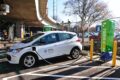


Fleet Background
Vehicles are booked up to three weeks in advance, with reservations claimed as soon as a car is returned. The fleet stays in constant motion, with minimal time between trips. While most operators strive for such a high utilization rate, this level is standard practice for Seattle City Light. And it all began with a mandate to right-size the fleet.
A severely under-utilized motor pool
Seattle City Light, a department of the City of Seattle, is the public utility that provides electricity to Seattle, Washington, and the surrounding areas, covering 131 square miles. It’s the 10th largest public utility in the United States.
In 2009, the city hired an external consultant to review its overall fleet operations, and a familiar problem surfaced: many of the utility’s light-duty vehicles were severely underutilized.
Because many of them were assigned to specific employees across various departments, they operated on a “one driver, one vehicle” ratio, resulting in low monthly miles and many vehicles sitting idle for days at a time.
Among the many recommendations for enhancements: reduce the fleet and manage what remained through a centralized, technology-operated motor pool.
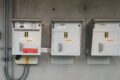
INVERS KeyManagers were installed at the North and South Service Centers, and 120 assigned vehicles were combined into a 60-vehicle shared pool. The target ratio was 2:1, two drivers per vehicle, shared on demand.
Within three months, that target was met. In fact, the data showed something better: the ratio had reached 3:1.
The original 120 drivers were still getting where they needed to go, but an additional 60 employees who had never had convenient access to a city vehicle now did. The pool wasn’t just absorbing the old fleet. It was serving people that the old fleet never had.
The system takes hold
Between 2010 and 2020, the motor pool expanded steadily, adding new locations, equipment, and regular technology upgrades.
By 2018, data showed vehicles were in constant use, making the system essential to city operations. The motor pool evolved from a convenience to a critical service for Seattle City Light.
The meter reading department is a good example. The utility invested in automated meter technology to reduce manual readings, but the system didn’t work as well as hoped. When billing problems appeared, the utility brought back more meter readers, and those employees needed vehicles every day.
The motor pool rose to the challenge and handled the extra demand. “We saw a big uptick come through in the motor pool that we weren’t anticipating,” says Jeffrey Butera, Fleet Manager, Seattle City Light.
These moments proved that even a well-run fleet faces surprises. But what matters most is how the team responds and adapts.
The keyless transition
For much of the first decade, vehicle access relied on INVERS KeyManagers that required reservations and authentication. While effective, the KeyManagers required frequent maintenance. Batteries had to be checked, key fobs wore out, and the hardware took a beating in service center environments.
In 2020, Seattle City Light equipped its vehicles with the INVERS iBoxx, a standalone telematics system that connected directly to the vehicle to enable keyless access, tracking, and monitoring.
The iBoxx didn’t require physical infrastructure at each location like the KeyManager did, enabling the fleet to be extended to remote offices and off-site locations.
A fully connected fleet, finally
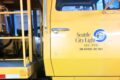
The next step happened when the iBoxx system was replaced by the CloudBoxx; Seattle City Light was now able to connect its entire shared fleet for central reservation and management.
Working with INVERS hardware and the Fleetster reservation platform, the utility deployed a fully automated, app-based motor pool that enables employees to reserve vehicles from their phones.
The transition was gradual, with the web-based booking system remaining available alongside the new mobile app. This allowed users to adapt at their own pace, and most ended up preferring the app.
For Gabriel, the keyless system simplified after-hours support. He could assist users remotely with lockouts or other issues, regardless of his location.
Being able to help people after hours, even if we’re not on site, has been huge.
~ Gabriel Goings, Fleet Project Supervisor, Seattle City Light
Administrative workload also decreased significantly. With the entire fleet connected through CloudBoxx, the team can pull mileage and vehicle data through the same dashboard.
And by retiring the KeyManagers, there are no longer fobs to replace or keys to track. The fleet runs, and the data comes seamlessly to them.
What 90% utilization looks like
Seattle City Light’s reservation board extends three weeks in advance. Vehicles are used back-to-back throughout the day, often with only minutes between reservations.
The system has created a culture of advance planning, or with users booking ahead to ensure access in a fleet that stays in constant demand.
We always refer to the Seattle City Light fleet to give other operators an idea of what a busy fleet should look like. Reservations are two to three weeks out. Users planning weeks in advance does not happen in many fleets.
~ Kelly Donnelly, Senior Implementation & Support Specialist, INVERS.
This high demand has led users to monitor availability in real time and quickly reserve vehicles as soon as they become available.
“The reservation ends, and someone else already booked it,” Jeffrey says. “Like, how is someone just sitting there waiting?”
Jeffrey and Gabriel implemented a 40-minute pickup window, 10 minutes before and 30 minutes after a reservation starts, before a vehicle is returned to general availability. With utilization rates like these, that window is a necessity.
What comes next
While most fleets use telematics data to justify expansion, Seattle City Light is asking a harder question: how much demand is the fleet not meeting?
Jeffrey is working with Fleetster to surface data on users being turned away, and once that number is in hand, the case for expanding the pool will be difficult to ignore.
Sixteen years in, the model still works. The next phase will leverage telematics data to align system insights with actionable evidence.
Seattle City Light is ready to scale the system further.
Related Posts
Car Sharing, Technology
The Hidden Cost of Reactive Maintenance in Car Sharing
Warning lights and missed alerts cost car sharing operators thousands per month. Here's how to cut maintenance tickets by 70%

Car Sharing, Technology
How can vehicle health data improve your car sharing?
We share our top 5 uses cases for using vehicle health data on warnings lights and service due dates to cut support calls, prevent breakdowns, and keep workshop service intervals on track.

Car Sharing, Expert Interviews
Car Sharing & Public Transport: Mobility beyond traditional mass transit
We talked to Vincent Neumayer, Executive Assistant for Public Affairs at Wiener Linien, about car sharing and public transport. Find out how car sharing and public transport can complement each other and evolve into a concept of public mobility.