

Once your vehicles are technically ready, you need to decide where your cars actually park, who gives you permission to put them there, and how to organize your fleet for maximum visibility and customer convenience.
In this lesson, we'll cover the three main parking approaches available at launch, what makes a station location work, and how to navigate on-street parking permits. We'll also look at the geofenced station model as a hybrid option, and what it means to be rental-ready before your first booking.
Where Are Your Cars Parked?
There are three main approaches to parking a car sharing fleet. Each has different cost implications, regulatory requirements, and customer experience tradeoffs:
1. Private or Off-Street Parking
Your vehicles are stored in a dedicated lot or garage you own, lease, or have contracted from a property owner. Access is predictable and operationally straightforward. The downside is that these locations are often less visible to prospective customers than on-street options.
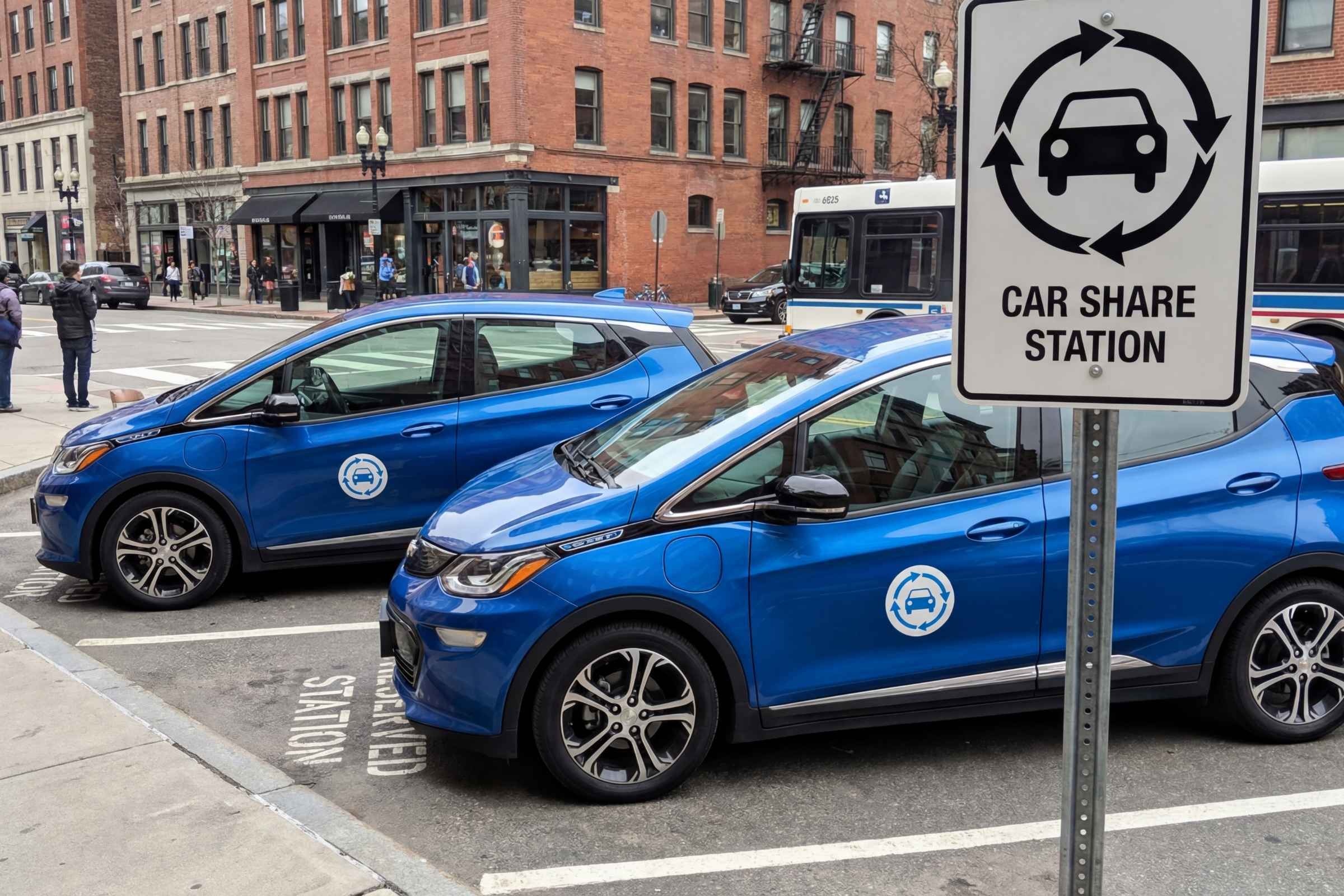
2. Designated On-Street Stations
Each station is a defined curb location where trips start and end. This model, the backbone of station-based car sharing, puts your fleet directly in front of potential customers. Visibility and walkability are high. So is the permit workload.
Source: 7 Car Sharing Parking Solutions for Operators
3. Free-Floating with Geofencing
Vehicles can park anywhere within a defined service zone. Customers end trips in any legal public space. This approach, typical for free-floating services, maximizes flexibility but increases vehicle dispersal and the daily rebalancing effort your team needs to manage.
Peer-to-peer services follow a different logic. Private owners connect their own vehicles through your platform, so deployment becomes a question of owner density in the right areas rather than positioning a fleet you control.
Most operators launch with one model and later mix them to provide the highest availability of parking. The right choice depends on your service area, your regulatory environment, and how much operational complexity you can absorb from day one.
Setting Up Stations
If you go station-based or hybrid, each location is a small infrastructure decision with long-term consequences.
What to Look for in a Station Location
Proximity to public transit:
The most consistent driver of usage. Stations near train stations, bus hubs, or major transit connections put vehicles exactly where demand already exists.
Street visibility:
Vehicles should be easy to spot from the pavement. Clear signs and physical markings help first-time users find the car without needing support from your team.
Multiple vehicles per spot:
Single isolated vehicles act as a deterrent to first use. Two or more vehicles at one station signal reliability and may lower the barrier for new customers.
"Car sharing works best when stations are close to demand and clearly visible – so designated on-street spots are crucial."

Paul Kreiner
Product Manager | cambio
Source: Insights Interview on Station-Based Car Sharing with cambio
Before any station goes live, confirm that every vehicle at that location is bookable in your system and the telematics connection is active. A station that looks ready but has a disconnected unit in the first space will undermine your launch before your first customer arrives.
Getting Permission for On-Street Parking
On-street stations require permits. The process varies by city and country, but the core dynamic is the same everywhere. Municipalities control the curb, and they need a reason to allocate it to your service.
Cities that have introduced car sharing permit programs have done so because shared vehicles reduce parking demand and private car ownership. Lead with that argument. Position your service as a mobility solution, not a commercial tenant asking for curb space.
The permit process typically involves identifying available curb space with your local transport authority, demonstrating compliance with any car sharing ordinance, and committing to minimum fleet sizes per station. Expect the process to take months, not weeks. Build that into your launch timeline.
Where no permit framework exists, start on private land and build the municipal relationship in parallel. Developer partnerships are another practical route. When car sharing is embedded in a residential project, the parking comes with the deal.
Source: INVERS Success Story with Quantum Mobility
Setting Up Free-Floating Zones
Free-floating deployment starts with defining your service zone, the geographic boundary within which customers can pick up and drop off vehicles. This is configured in your platform as a geofence and determines where vehicles appear bookable in the app.
Zone size matters more than most operators expect at launch. A zone that is too large spreads your initial fleet too thin to build reliable coverage. Most operators launch with a compact zone covering a single district, then expand as utilization grows.
Rebalancing from Day One
Without fixed end points, vehicles cluster in high-demand areas and leave gaps elsewhere. Two mechanisms help manage this:
- Active rebalancing: Your operations team physically moves vehicles from oversupplied areas. Reliable but operationally intensive.
- Pricing incentives: Discounted trips or credits for ending in low-coverage areas. Scales better, but less predictable.
The Mixed Option: Geofenced Stations
Geofenced stations sit between a rigid station grid and full free-floating. Vehicles can park anywhere within a defined zone (a neighborhood, a district, or a campus) rather than at fixed designated spots.
For new operators, this reduces the upfront work of securing individual curb permits while still giving you a defined area to build demand in. As your service grows, you can layer in anchor stations within the zone to improve vehicle availability at peak times, without removing the flexibility that makes the model attractive.
The tradeoff is operational. Without fixed end points, vehicles spread unevenly over time. You'll need either regular rebalancing or a pricing incentive (such as discounted trips ending at preferred locations) to maintain coverage across the zone.
You Should Be Rental-Ready at This Point
Vehicles are deployed. The final check is rental-readiness. Every vehicle should be technically configured, physically accessible, and bookable with no manual steps required from your team.
Run an end-to-end test on at least one vehicle per station before opening bookings. Book it, unlock it via the customer app, start a trip, return it, and verify the trip recorded correctly. If any step fails, catch it now rather than in front of your first paying customer.
Physical condition matters too. Clean, fueled or charged, and with any in-vehicle materials in place. A vehicle that looks ready signals that the operator is ready.
Key Takeaways
What parking options do new car sharing operators have?
There are three main approaches: private off-street lots, designated on-street stations, and free-floating within a geofenced zone. Each trades cost, visibility, and operational complexity differently. Most operators launch with one model and expand from there.
Do I need dedicated stations or can I start free-floating?
Both are viable at launch. Geofenced free-floating requires fewer upfront permits. Station-based gives more visibility but needs curb agreements. Your regulatory environment and team capacity should guide the choice.
How do I get permission for on-street car sharing spots?
Approach your local transport authority early and frame the request around parking demand reduction. Many cities have car sharing permit programs. Where none exists, starting on private land while building municipal relationships can be a practical first step.
What makes a good station location?
Proximity to public transit is the strongest driver of usage. Visible, above-ground positions outperform hidden spots. Stations with multiple vehicles perform better than single-vehicle locations, which can appear unreliable to first-time users.
What is a geofenced station model?
A hybrid where vehicles park anywhere within a defined zone rather than at fixed spots. Reduces the number of curb permits needed upfront. Requires active rebalancing as vehicles spread unevenly over time. Plan for that from the start.
How do I know my vehicles are rental-ready?
Run an end-to-end test: book, unlock, start a trip, return, and verify the trip recorded. Vehicle should be clean, fueled or charged, and bookable with no manual steps needed. Test one per station before going live.